Re-framing Kim Lordier’s “Backlit In Monterey”

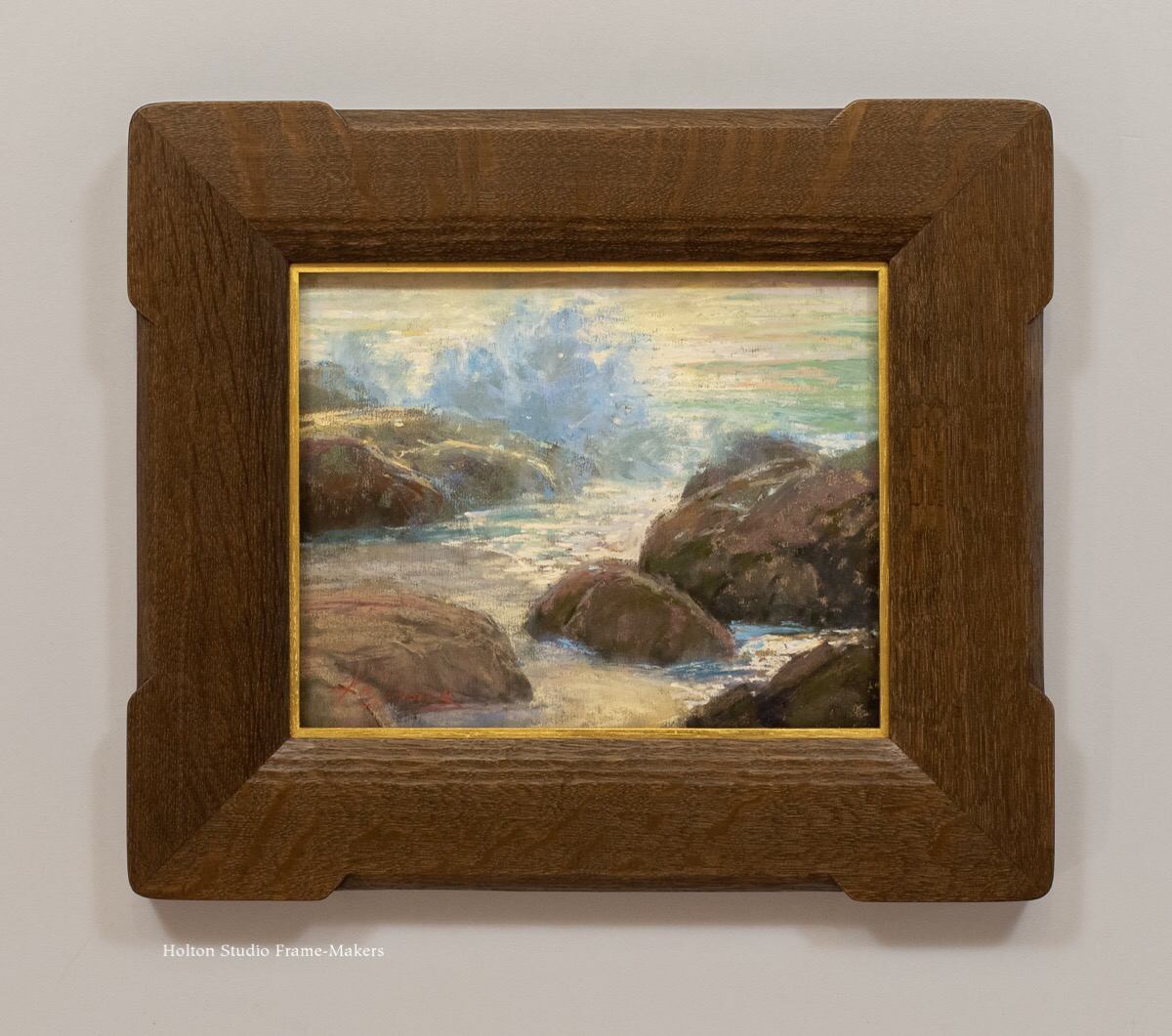
It’s not often that we re-frame a picture we’ve framed for the gallery, but especially smaller paintings often get very plain frames, and sometimes customers want something a little more elaborate.

Kim Lordier painting

“Backlit in Monterey” as originally framed

Such was the case with Kim Lordier‘s pastel “Backlit in Monterey,” our “poster child” for Little Windows II—which, by the way, ends this Saturday, the 28th. The customer spotted the frame we used on a painting by Ernesto Nemesio a few years ago and wisely surmised that it would serve as a great setting for this iconic coastal scene.

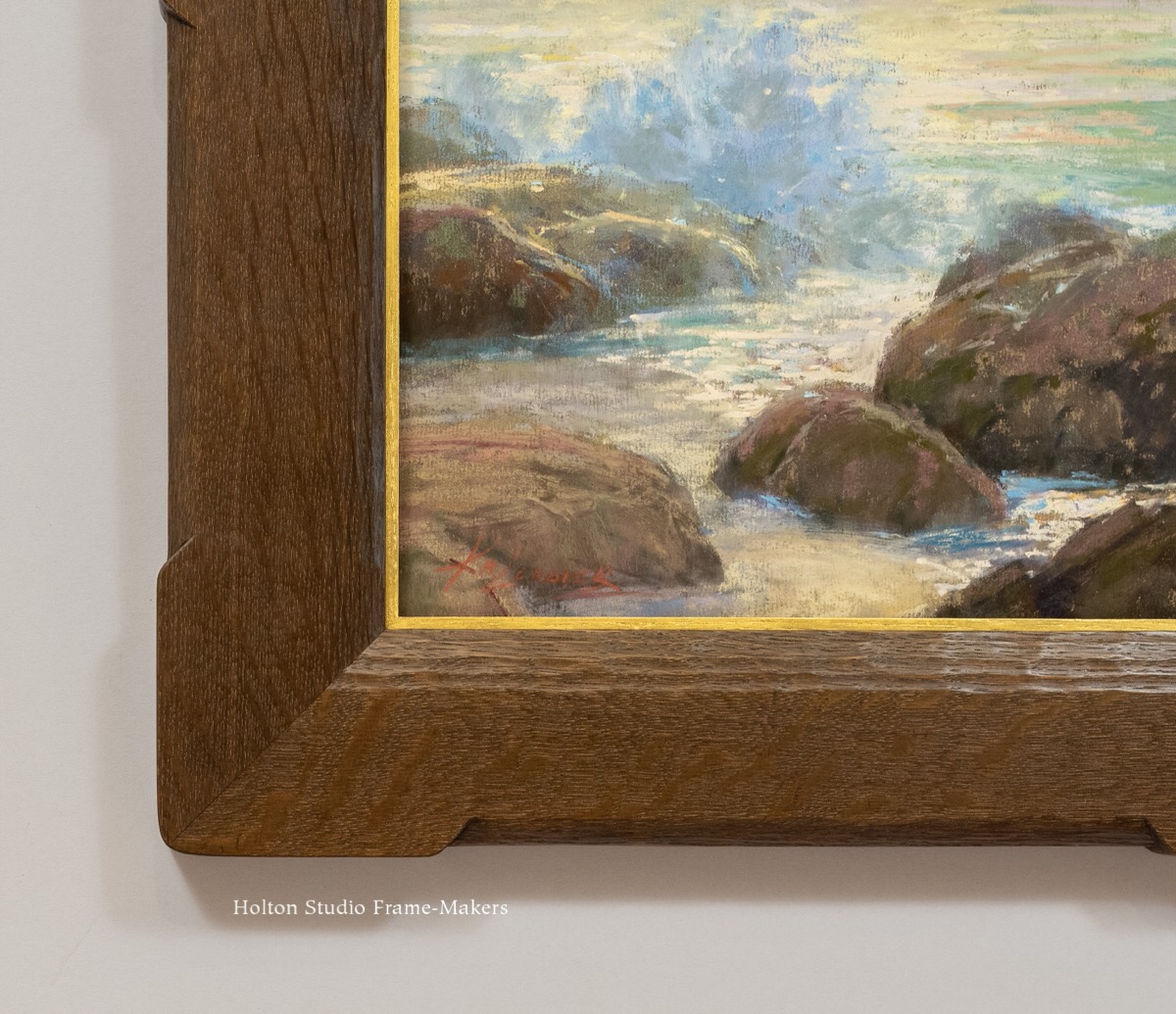
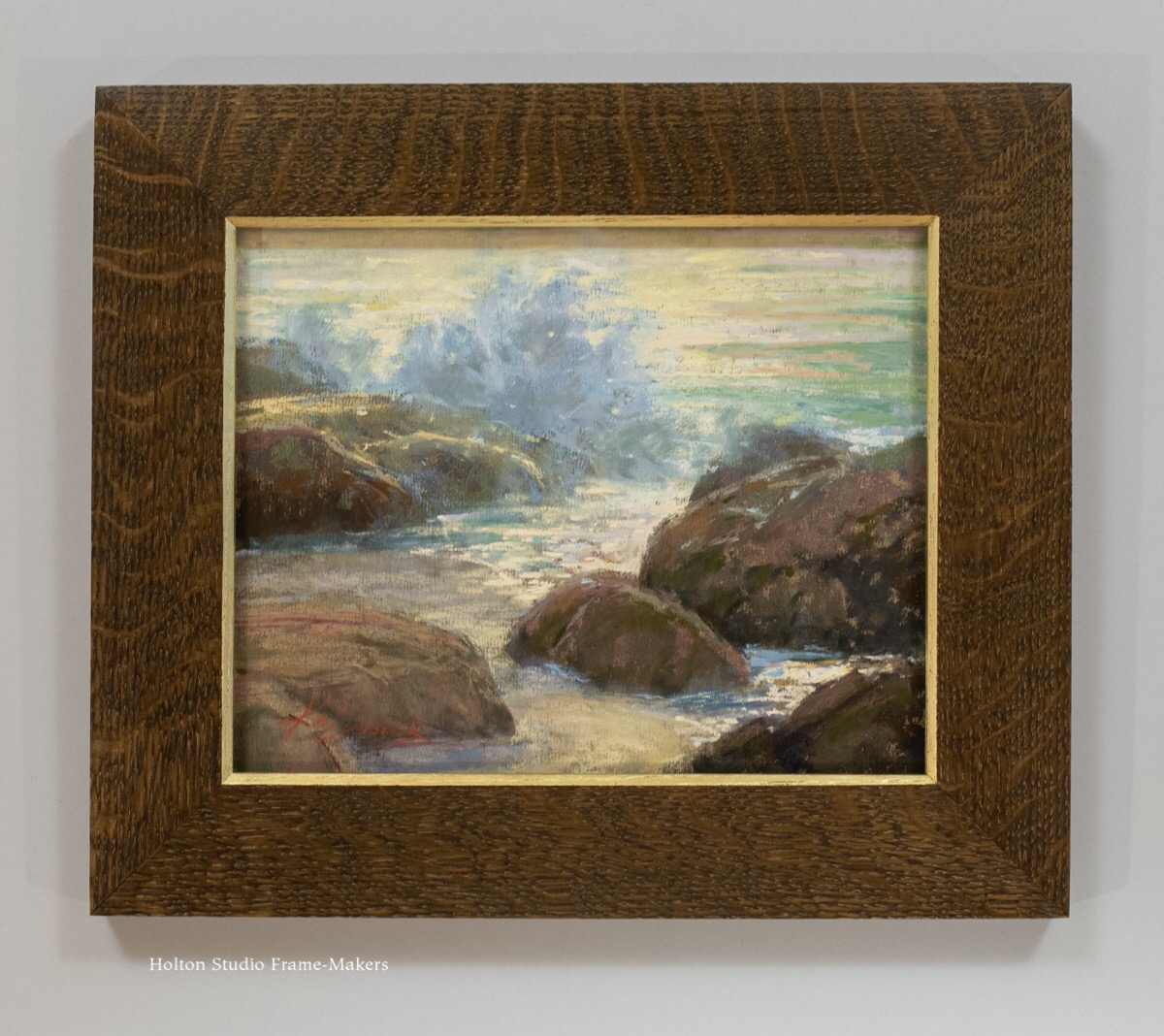
The frame is quartersawn white oak with Weathered Oak stain and a gilt slip, and is carved on the sight edge and back edge, with outset rounded corners. Both the rounded carved elements and the corners pay tribute to Kim’s surf-beaten tidal rocks.

See Little Windows II before it closes—or check it out online.

Kim Lordier painting

Kim Lordier painting—framed detail

Kim Lordier painting

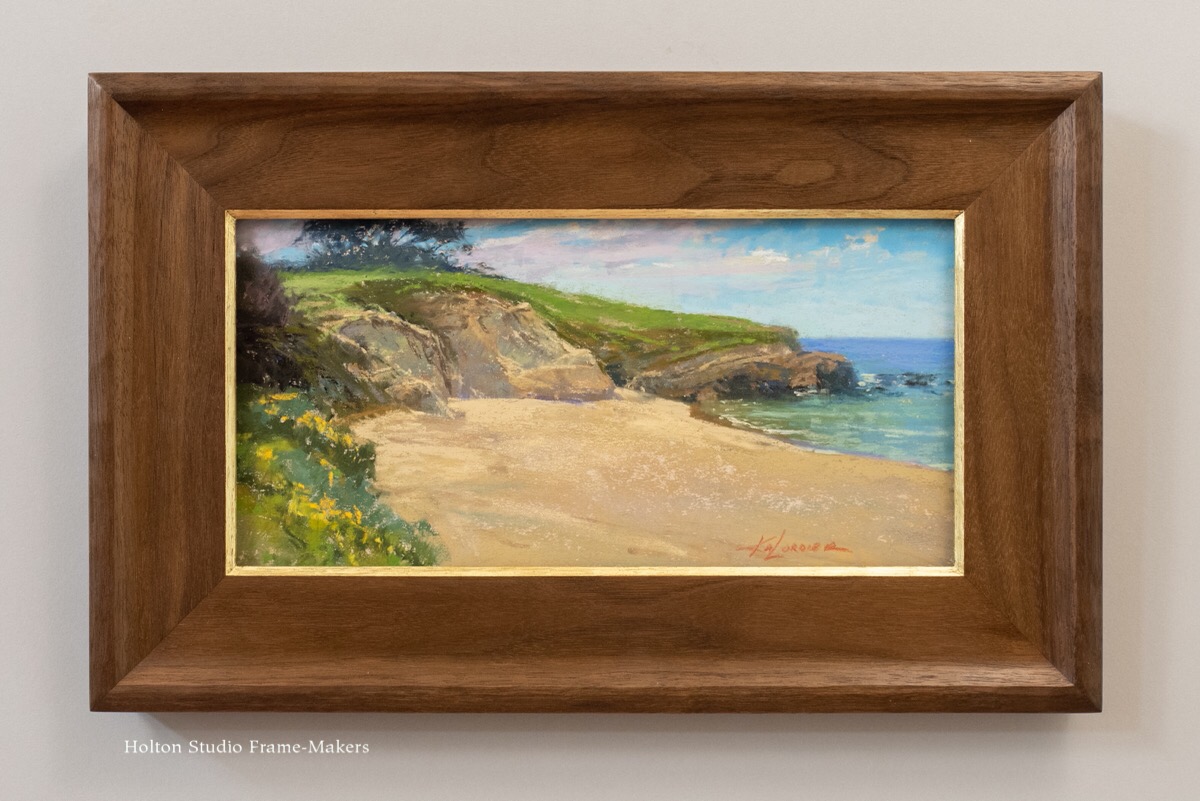
This one above is sold, of course, but we still have another coastal scene by Kim Lordier, “Sparkling Sand and Cliff,” below. It’s in a carved and parcel gilt walnut frame.

Kim Lordier painting

Kim Lordier
“Sparkling Sand & Cliff”
Pastel, 6″ x 12″. $2,550 framed.
BUY

Carol Peek’s Little Windows On California

Our exhibit of small paintings by our regular roster of landscape painters has been extended and is now in its last week. I didn’t want Little Windows II to close without spotlighting Carol Peek, who says of her three works, “These paintings are celebrations of my love for the California landscape and her animals.” Here they are with Carol’s own comments:

Carol Peek painting

Carol Peek, “The Little Paint Colt.” Oil on linen panel, 6″ x 8″.

The little colt was born next door and was sold to someone in Texas so he moved away at nearly a year old. Here he is at just about 6 weeks of age. His mom was always nearby, that is her shadow in the foreground keeping a watchful eye on him.


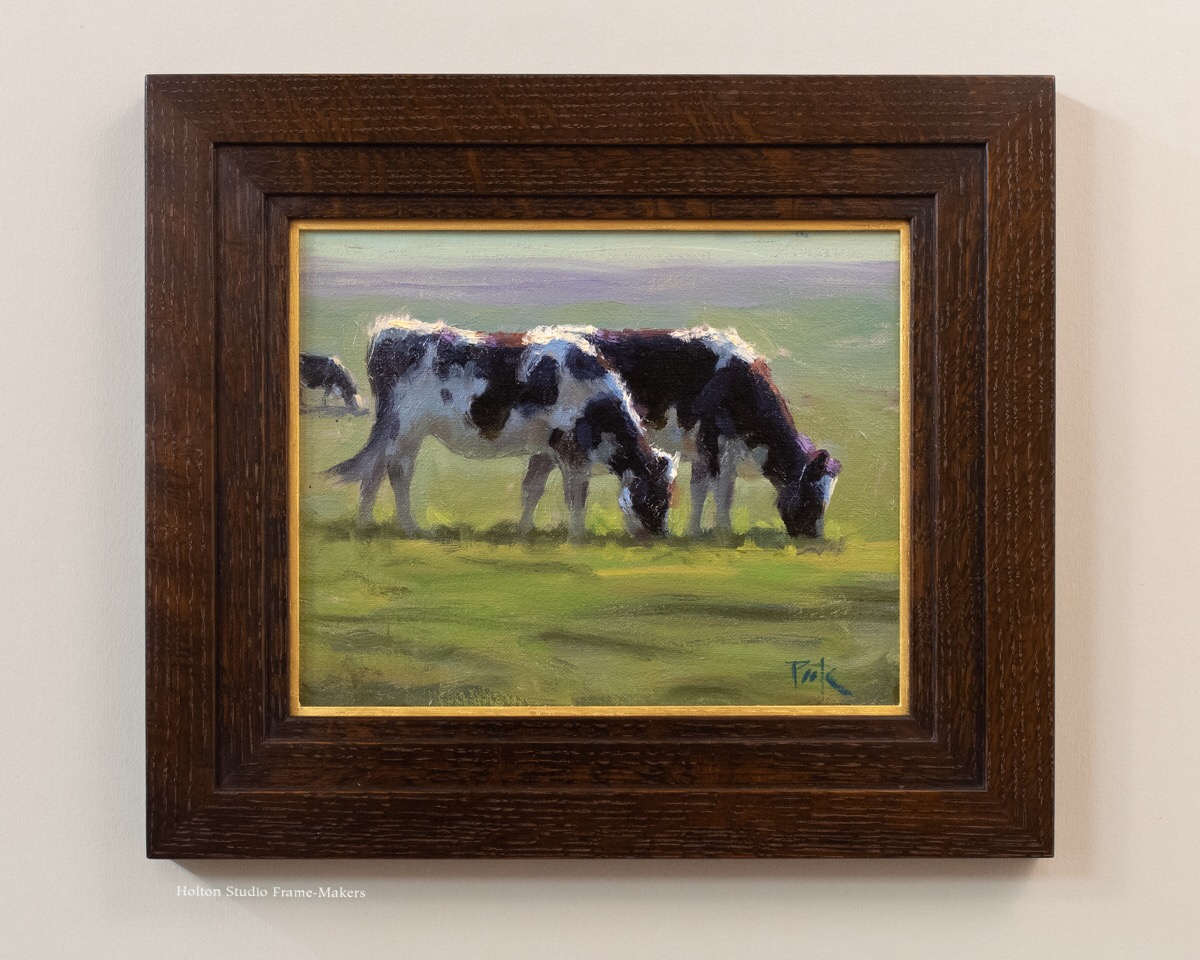
Carol Peek, “Breakfast.” Oil, 8″ x 10″.

The heifers or young calves, were painted in West Marin and were grazing and moving so after the initial “lay in”, I kept checking for them to return to a similar position to get the lights and shadows just right. This feels fresh and light, as if you were standing right there with them!


Carol Peek painting

Carol Peek, “California Spring.” Oil on linen panel, 6″ x 8″.

This landscape is a favorite morning walk, in Sonoma county looking into Marin, and this scene depicts the beginning of Spring, when the air is cool and fresh, the growing grasses and leaves seem to sing in your ears nearly drowning out the bird song and critters running around, celebrating the hope and promise of the new year.

The show closes this Saturday, August 28, so I hope you’ll find time this week to come by to see Little Windows II and bask in the love Carol and all these artists have for this land. But if you can’t make it in person, you can peruse—and purchase—the work online here.

Little Windows On the Night

I’m partial to nocturnes—paintings of the night—and Little Windows II, our current all-gallery show of small paintings, has several beautiful ones I’m eager to share with you here.

Terry Miura painting

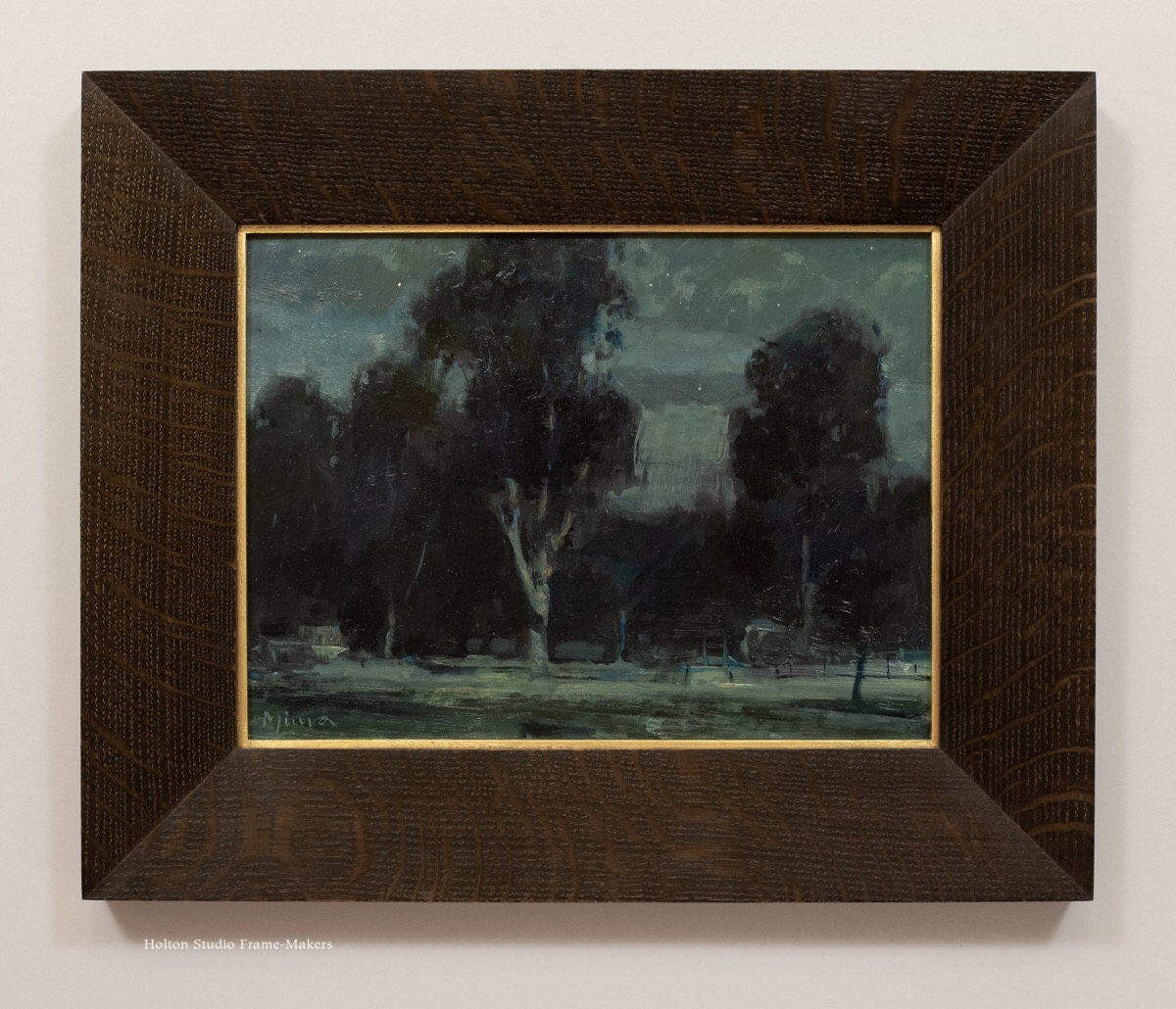
Terry Miura, “Nightwatchmen.” Oil on panel, 9″ x 12″. SOLD.

Terry Miura, who did the painting at right, sometimes tapes to the top of his easel a piece of paper with the word “mystery” on it, and it’s a good bet that the art of the nocturne exerts the strongest pull on painters who prize this quality. Especially here in California, the nod has to go to Charles Rollo Peters (1862-1928), who the poet George Sterling called the “Master Painter of Nocturnes” and Ambrose Bierce called the “Prince of Darkness.” Under Peters’s hand the landscape proved at least as moving in the mysterious light of the moon as it is when under the sun. As one critic said of the artist’s mastery of moonlight, “He has reduced it to canvas so you may bathe in it, dream in it—even grow foolish in it, so true is the mystic spell.”

The mystic spell of the nocturne lives on in the hands of California’s living painters—artists like Richard Lindenberg, Ellen Howard, Christin Coy, and Terry Miura.

Little Windows II continues for another week. Come see it in person—or check out the whole show online here.

Richard Lindenberg painting

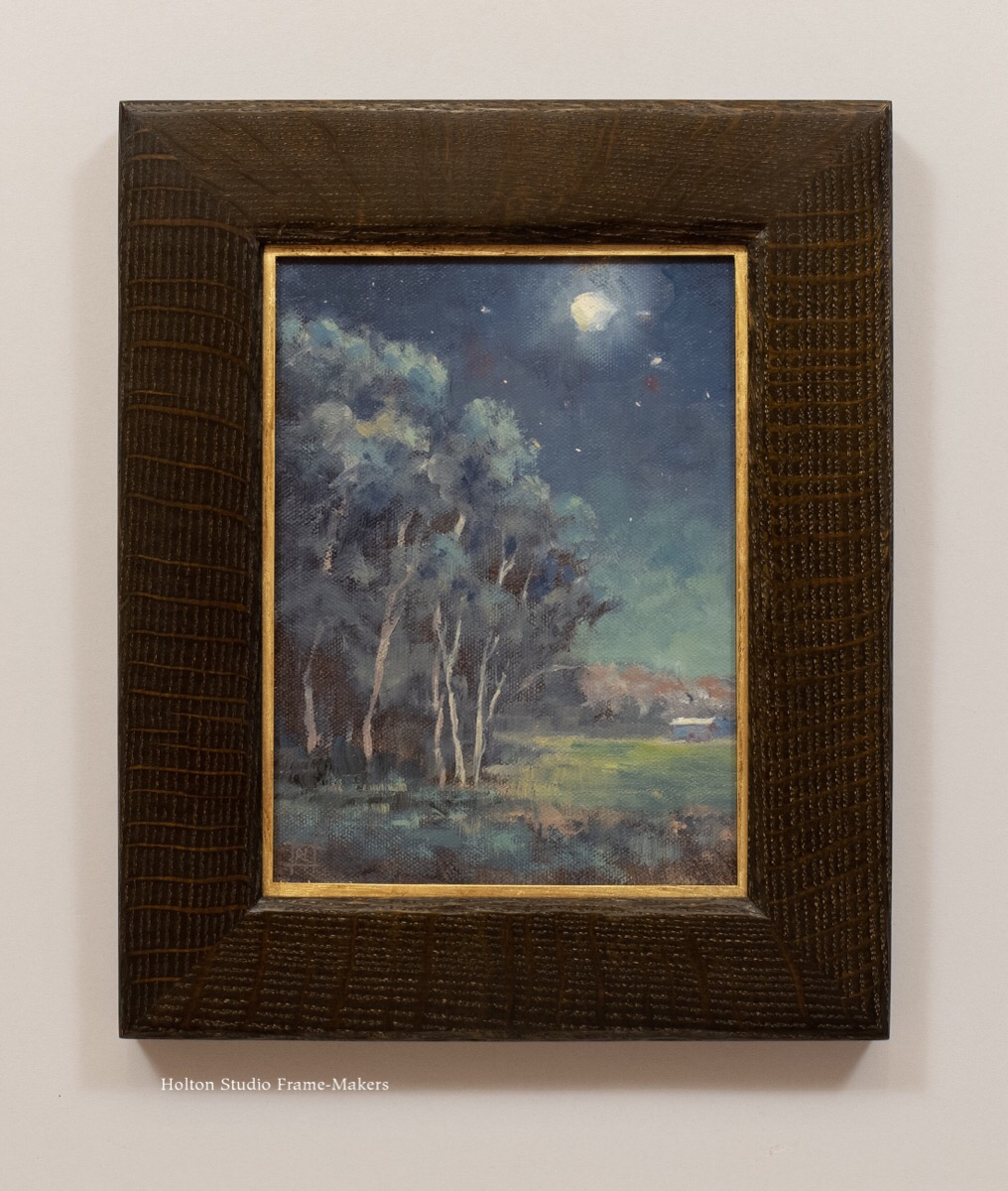
Richard Lindenberg, “Moonlit Grove.” Oil on panel, 8″ x 6″.


Ellen Howard painting

Ellen Howard, “Evening Light.” Oil on panel, 9″ x 12″.


Christin Coy

Christin Coy, “Full Moon Over Mt. Diablo and Bay.” Oil on canvas, 6″ x 8″.

“Little Windows”

Today Jessie, Steph and I hung “Little Windows II” at the Gallery in preparation for tomorrow’s opening. (No reception; we’re still being cautious about the number of visitors inside.) Made up of California landscape paintings, 9″ x 12″ and smaller, it’s a reprise of a show we held last summer, only that version was online only. We’re very grateful and happy to be able to have everyone back in the gallery in person. But you can also view it online—here—if you like. It runs Saturday, July 17 through August 14.

Kim Lordier painting

Kim Lordier “Backlit in Monterey,” pastel on paper, 8″ x 10″.

The show includes new and recent work from nearly our entire roster of exceptional artistic talents. The piece we’ve chosen for our poster and p.r. is Kim Lordier’s 8″ x 10″ pastel, “Backlit in Monterey.” Like most of the paintings in the show, it’s in a ready-made frame. This one’s a very simple flat with a narrow parcel-gilt sight edge chamfer. It’s made in quartersawn white oak with Weathered Oak stain.

“Backlit in Monterey,” just sold yesterday, but another beauty from Kim is “Soil Rich, Half Moon Bay,” below. This 9″ x 12″ is also in a ready-made—a No. 1—2″ with dowels pinning the splined joints, made in quartersawn white oak with Medieval Oak stain, with a gilt slip.

Kim Lordier pastel

Kim Lordier, “Soil Rich, Half Moon Bay,” pastel on paper, 9″ x 12″

We hope you’ll come see the show and consider purchasing one (or more!) of the nearly 60 paintings, and adding a little window to your home—a new and inspirational view onto this beautiful land of ours.

Again, the show opens tomorrow, Saturday, July 17 and runs through August 14, and can also be viewed online here.


Framing David Lance Goines

“To foster intercultural respect and understanding, lifelong friendships, and leadership skills for a more just and peaceful world.”—Motto of International House, UC Berkeley

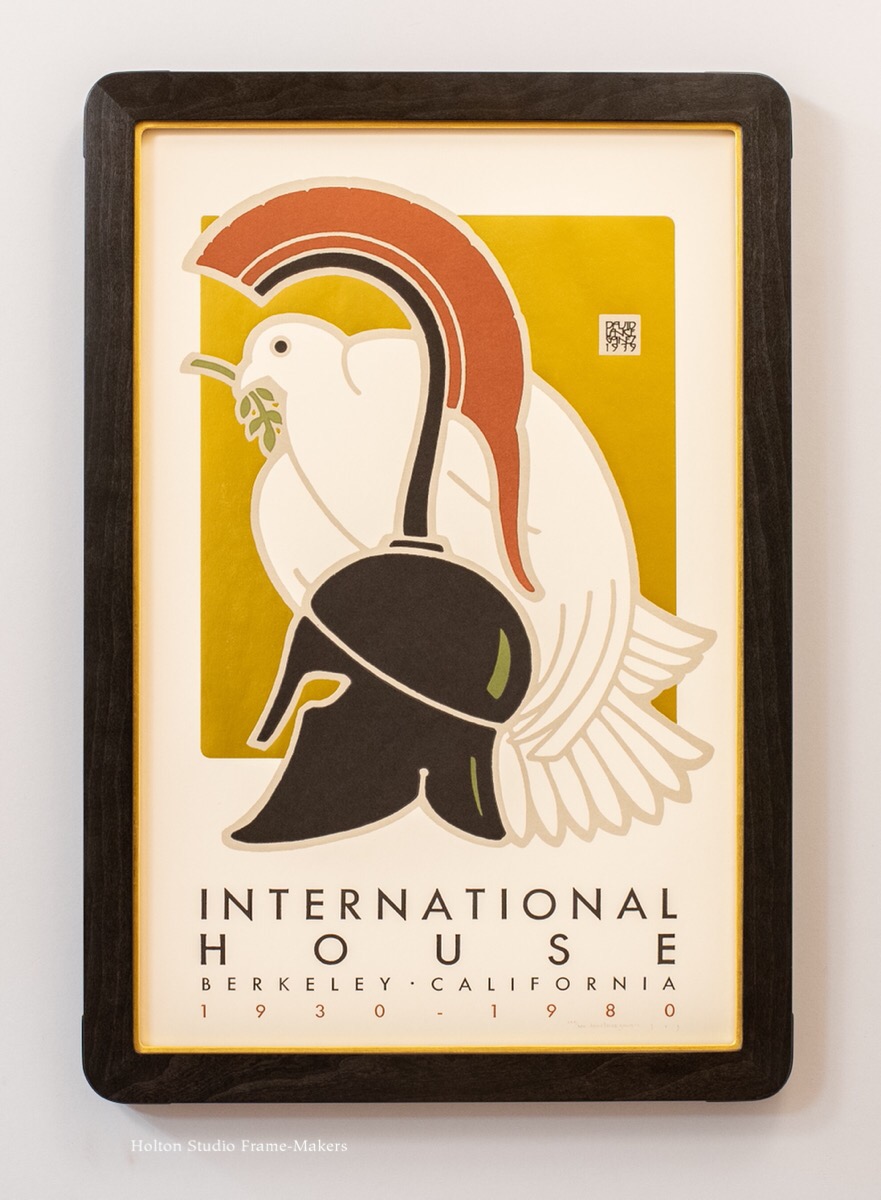
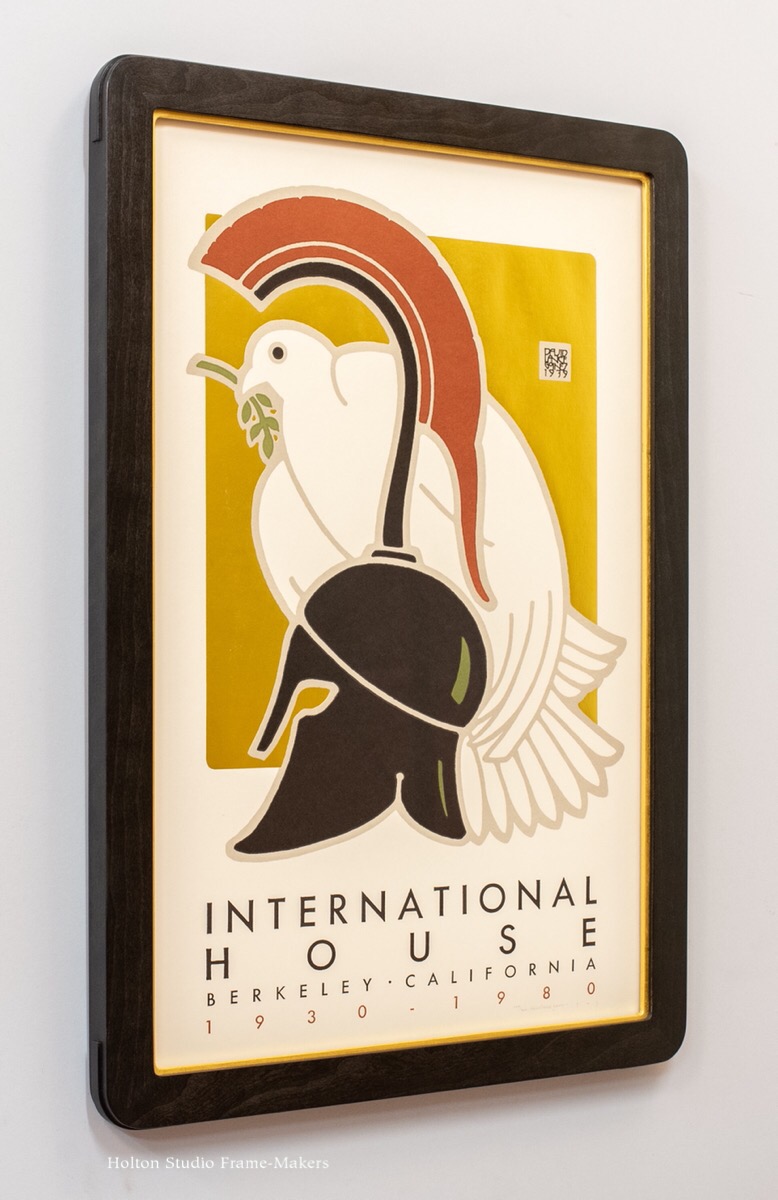
In the Gallery, we’ve been enjoying featuring a number of posters by one of Berkeley’s living treasures, David Lance Goines. This example below of the artist’s work commemorates another of the city’s living treasures, the University of California’s landmark International House. The 24″ x 16″ poster is framed in a No. 1 “Hasui”—1-1/4” with proud splines and corners rounded inside and out, made in cherry with Black stain and a 23kt gilt slip also with rounded corners echoing the corners of the poster’s gold background.

David Goines poster

David Lance Goines, “International House.” Color lithograph poster, 1979. 24″ x 16″. Signed at lower right, and numbered (158/300).

Guided by the motto above, for more than nine decades I-House has hosted students from all over the world, including some lucky American students whose vistas have invariably been broadened by the experience. Some, such as the Canadian-born economist and U.S. ambassador to India John Kenneth Galbraith, have gone on to lead illustrious careers on the world stage. (One visitor to the gallery told me she worked at I-House at the time this poster was done. Looking on it fondly, she was reminded of hearing Galbraith speak at the anniversary celebrations.)

David Goines International House posterIn 1928, Florence Edmonds, wife of I-House founder Harry Edmonds, said,

International House is like a ship. It does not belong to New York or Paris or any other great city in any part of the world, but it belongs to all of us who appreciate its purpose… Just as now, when we go on an adventure, we do not hamper ourselves with too many trunks and other pieces of baggage, so we do not carry onto this ship our trunks of worn-out prejudices and ideas about one another, but come on it free from encumbrances and ready for an adventure in living with folk.


David Lance Goines’s signed and editioned poster “International House” has sold, but you can view other Goines posters in our inventory…

Two Flowering Frames

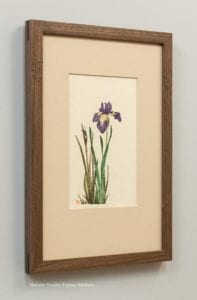
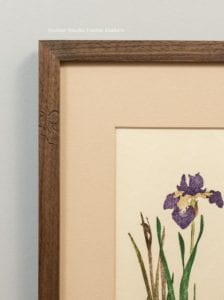
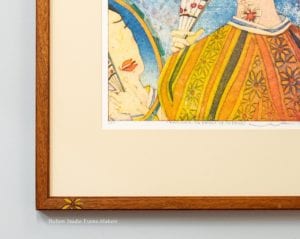
May is a flowering time, and nothing suits frames better than flowers. Two prints to recently come through the shop inspired carved flowers in the frames. The iris (unsigned) is a Japanese woodblock, and the figure is a copper etching by Yuji Hiratsuka, a Japanese American artist now living and teaching in Oregon.

AnonymousJapanese print of irisThe Iris is tiny—only about 4″ x 6″ but extremely well done. The 1/2″ wide frame is in walnut with a very dilute black stain. With a Japanese v-tool I carved iris pedals near the top of each side. The bottom face and the sides up to the flowers are lightly tooled with a gouge for a texture that contrasts with the smooth top section.


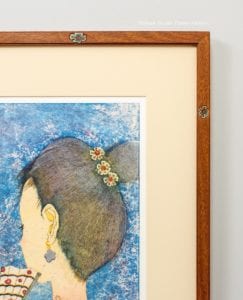
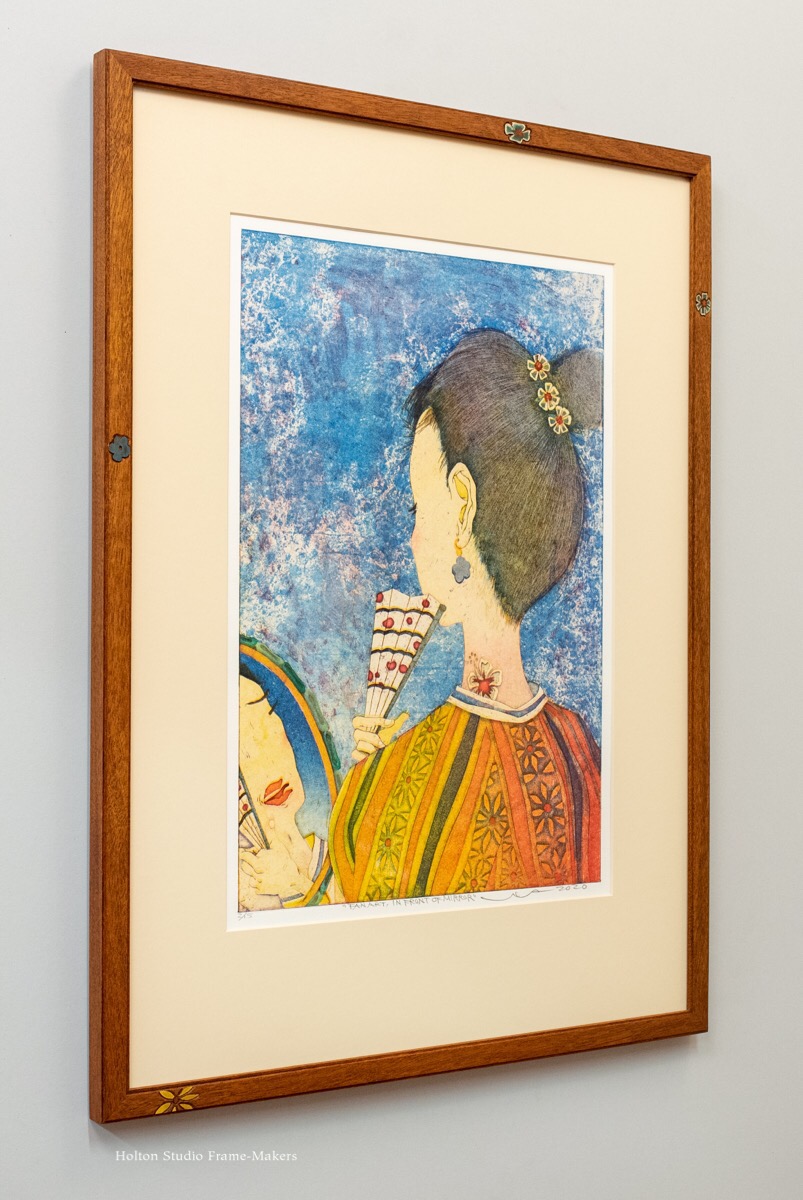
Hiratsuka printFlowers are a frequent theme in Yuji Hiratsuka‘s work. This piece, titled “Fan Art In Front of Mirror,” features a variety of small delicate blossoms which were perfect—even down to their scale—for adorning the 3/4″ wide frame. And given how colorful the print is, I decided to paint the flowers. The print’s playful quality seemed to call for placing the flowers randomly. The basic profile of the mahogany frame is our No. 15, which is a flat with narrow fillets on the inside and outside. A simple choice, it echoes the frame on the mirror as well as the stripes on the woman’s clothing.


Framed Hiratsuka print

Framing Mary DeNeale Morgan

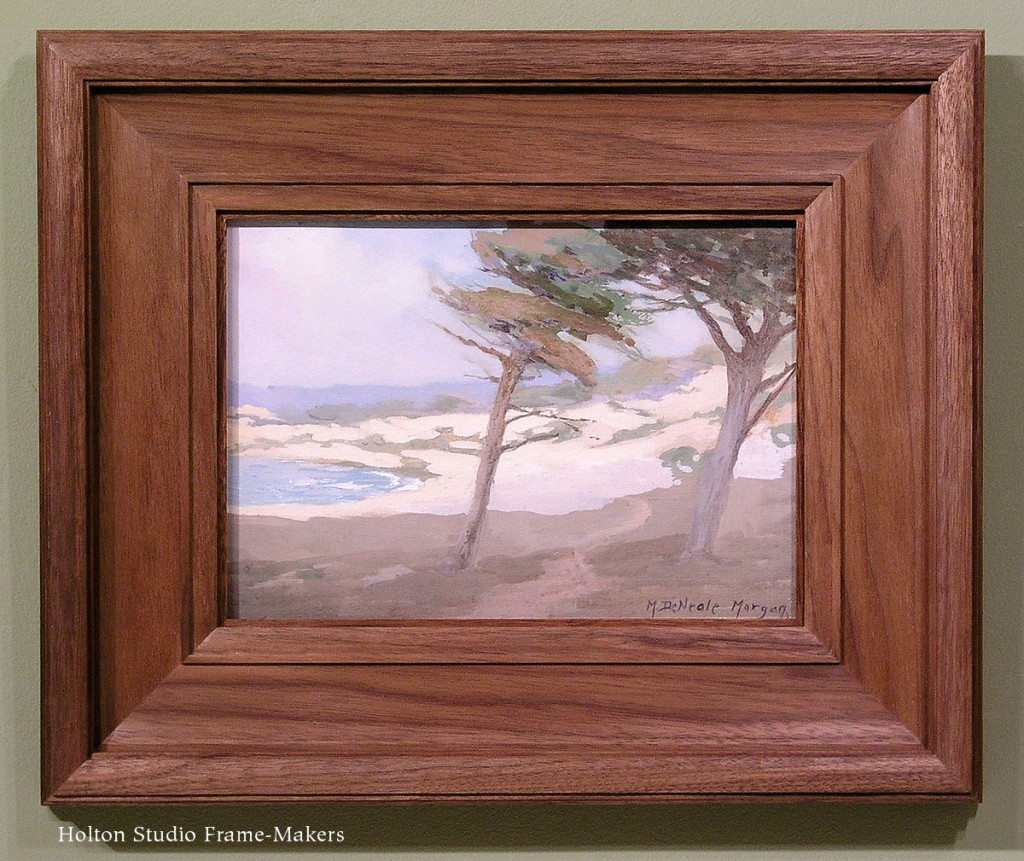
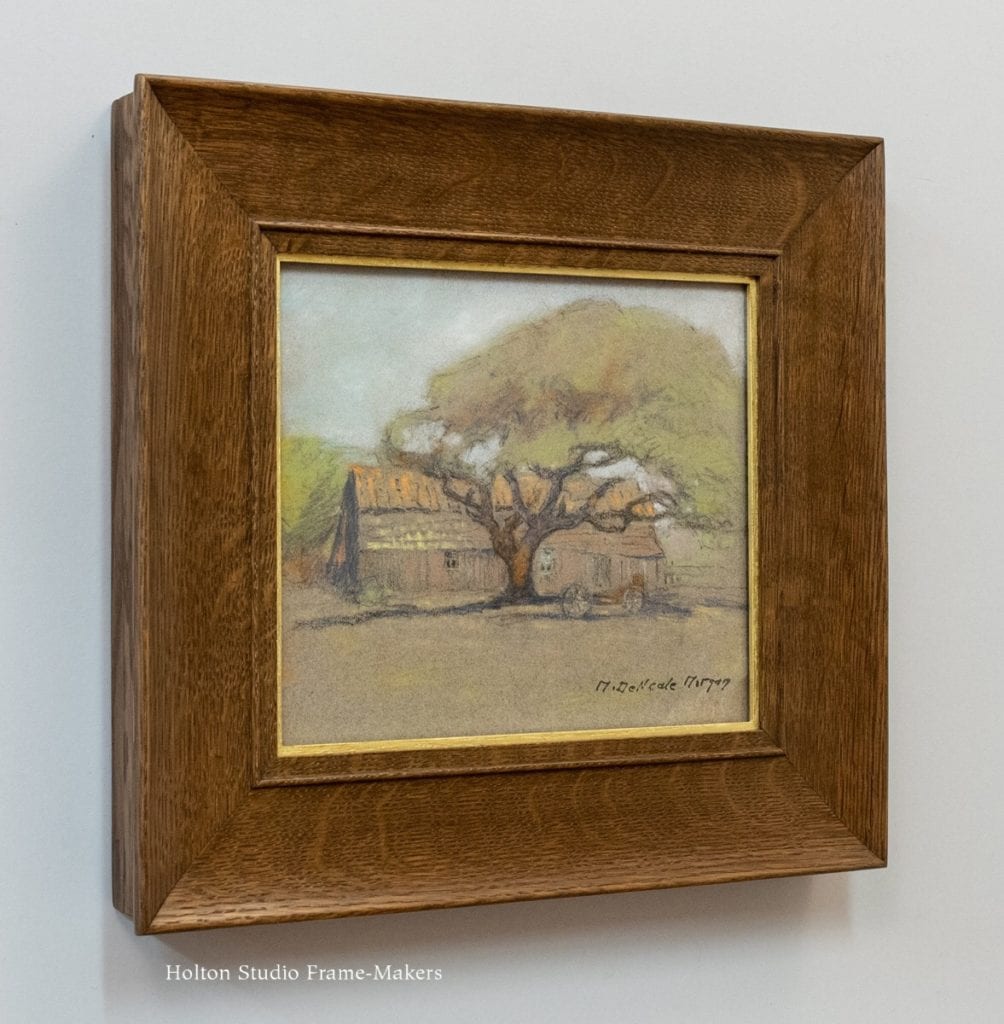
Here’s a lovely Mary DeNeale Morgan (1868-1948) pastel we just framed in a cove profile, our No. 308.0. Morgan was best known for her Monterey cypress trees. This is a classic California oak, though, and is suitably framed in quartersawn white oak with Weathered Oak stain. The 8 x 10 pastel is in a 2-1/2″ wide profile with a pale gold slip. It was framed for—and just sold by—California Historical Design.
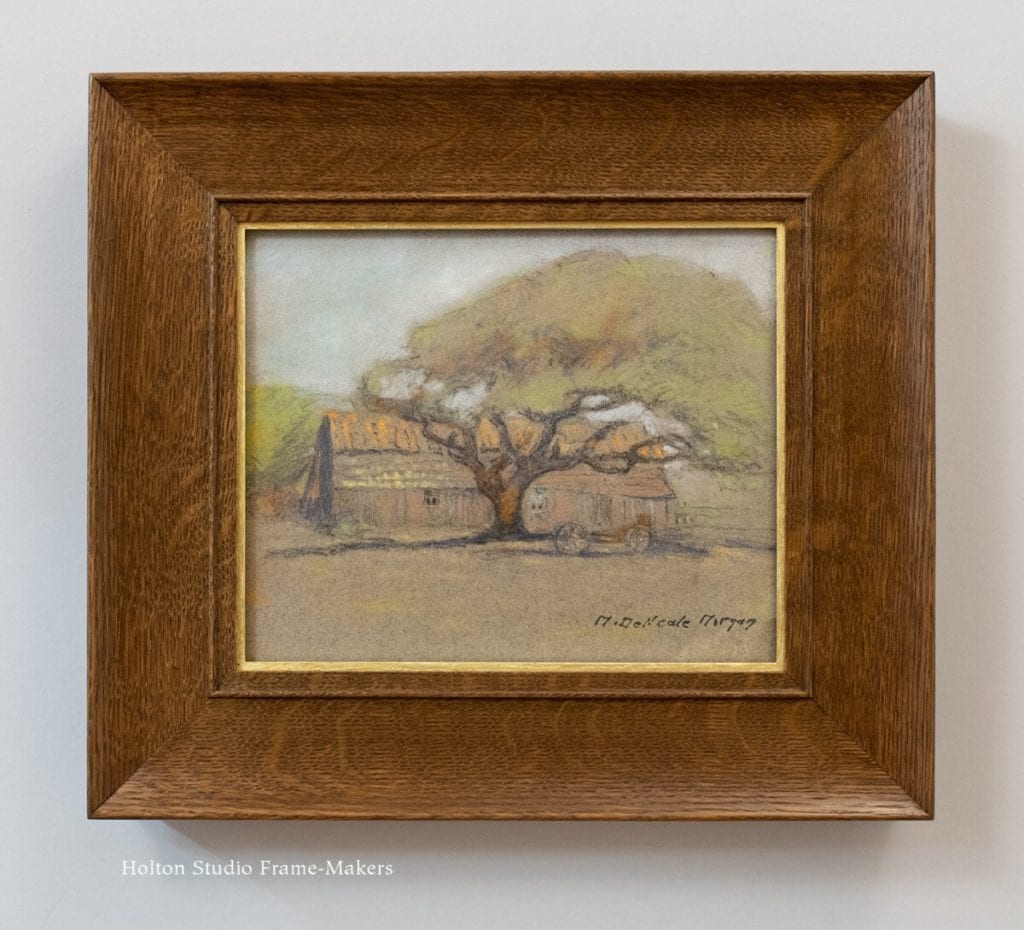
Morgan grew up in Oakland, where she was a student of William Keith’s. Long drawn to the Monterey Peninsula and the artists’ colony at Carmel-by-the Sea, she eventually left the East Bay to buy fellow artist Sydney Yard’s Carmel house in 1910, taking up full-time residence in the town.

Scott Shields writes in Artists at Continent’s End that according to Morgan’s sister, the painter
M. DeNeale Morgan painting

A 7″ x 10″ Morgan gouache painting of Carmel Beach we framed in walnut several years ago.

possessed an ‘innate and prophetic sense of the transiency of the beautiful country which surrounded her in Carmel.’ She became one of the town’s leading preservationists and in 1922 led a successful fight to save Carmel’s beach from developers. She identified this transience not only in the coastal dunes but also in the trees and historic adobes of Monterey. Her paintings manifested her philosophy. A reporter for the Carmel Pine Cone explained ‘Miss Morgan says she will stick to painting her cypress trees until they sink into the ocean, or, what is just as tragic or final, be hopelessly built around. Another from the Californian noted, ‘Her strong, vital style has recorded the Carmel of yesterday and today, free from the signs of the progress of tomorrow.’

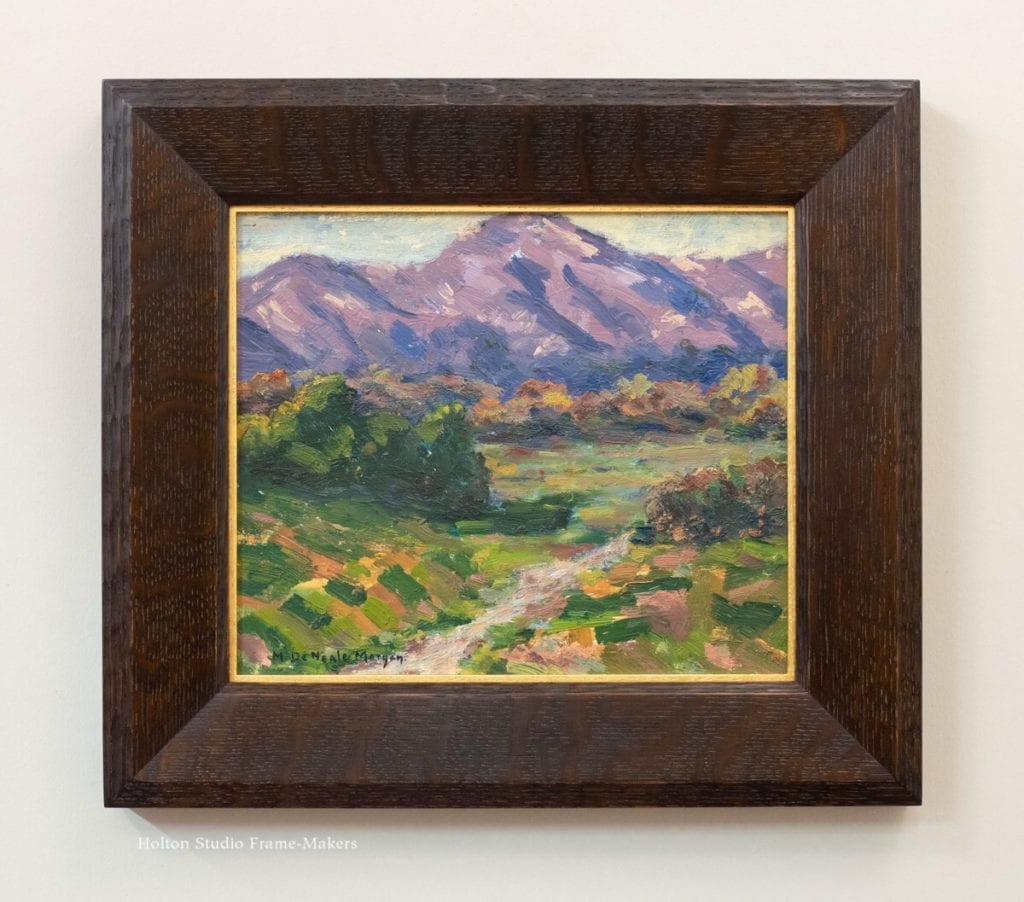
Morgan used several media, most often tempera. Mary DeNeale Moran paintingIn the twenties, though, she started using oils more—a small one we framed last year is at right—the natural boldness of which better conveyed the confidence of an accomplished painter. Combined with her habit of signing her paintings “M. DeNeale Morgan”, at least one critic assumed she was a man, writing, “Morgan of the famous art colony down the coast is giving his first one-man exhibit in Berkeley. Almost all of his paintings are large, of masculine vigor, resounding with color spread with a broad, vigorous brush.”
After being named by Scribner’s Magazine, in 1928, one of the nation’s foremost female artists, the press took to referring to her as the “Dean of Women Painters.” You have to wonder what title they would have bestowed on her had all the critics believed she was a man!

Shields’s entry on Mary DeNeale Morgan concludes, “An unfinished painting remained on her easel when she died of a heart attack in a Carmel cafe at the age of eighty.”
Mary DeNeale Morgan pastel

Framing Fin de Siecle Paris

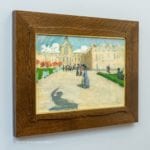
Architecture depicted in a painting is very often a cue for designing the architecture of the frame. We just framed this ca. 1900 unsigned impressionist painting of a Paris street scene for California Historical Design. The painting’s 9-3/8″ x 13-7/8″. I wanted the frame to be simple and plain to suit the loose painting style, but to acknowledge the baroque building. The frame is quartersawn white oak with Light Medieval stain. It’s a 2-1/2″ wide flat profile with a raised sight edge carved in a simplified baroque pattern. Available here.Framed painting of Paris street scene

The City’s Light: How Lawrence Ferlinghetti Painted and Framed San Francisco

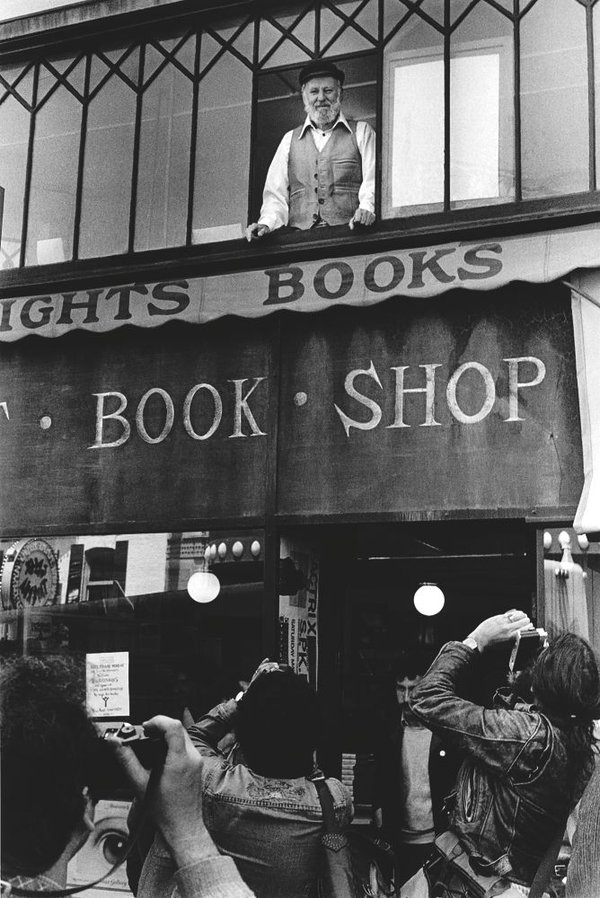
Lawrence Ferlinghetti was not born in San Francisco, but San Francisco, and more particularly its famously Bohemian neighborhood of North Beach, became the frame for his twin arts of painting and poetry. Eventually his adopted town acknowledged Ferlinghetti’s contribution to the local culture by making him its poet laureate. Central to his legacy and contribution to The City was the now world famous Columbus Avenue bookstore he founded in 1953. By the front door he inscribed a slight variation on a line by another Italian poet: “Abandon All Despair, Ye Who Enter Here.” The shop was called City Lights.

Light was one of the artist’s favorite themes. In an essay on his painting, he riffed off a line by a painter he admired:

“All I wanted to do was paint sunlight on the side of a house,” said Edward Hopper (or words to that effect), and there have been legions of poets and filmmakers obsessed with light. I would side with the irrational visionary romantic who says light came first, and darkness but a fleeting shadow to be swept away with more light. (“More light!” cried the great poet, dying.) Poets and painters are the natural bearers of it, and all I ever wanted to do was paint light on the walls of life.

No stranger to darkness and despair, Ferlinghetti earned his habits of hope and illumination. He had been an orphan child, and was a veteran of the Normandy invasion. Toward the end of his three years in the Navy in World War II he visited Nagasaki just after its annihilation by atom bomb—an experience that made the poet a committed pacifist and a critic of “men of extinction.” His pursuit of light did not ignore such darkness. “The sunshine of poetry casts shadows. Paint them too,” he wrote.

Ferlinghetti died this past February, just a month shy, incredibly enough, of his 102nd birthday (March 24, also William Morris’s birthday). The changes his city saw in his seven decades there have left most wordsmiths flummoxed. In How to Paint Sunlight (2000) the wise poet and painter celebrated life on The Bay by describing the only thing that seemingly remained fixed:

The Changing Light

The changing light at San Francisco
                        is none of your East Coast light
                                          none of your
                                                                pearly light of Paris
The light of San Francisco
                                                is a sea light
                                                                      an island light
And the light of fog
                                    blanketing the hills
                        drifting in at night
                                     through the Golden Gate
                                                          to lie on the city at dawn
And then the halcyon late mornings
                  after the fog burns off
                          and the sun paints white houses
                                                          with the sea light of
Greece
                                with sharp clean shadows
                                      making the town look like
                                                    it had just been painted
But the wind comes up at four o’clock
                                                                    sweeping the hills
And then the veil of light of early evening
And then another scrim
                                when the new night fog
                                                                          floats in
And in that vale of light
                                           the city drifts
                                                                    anchorless upon the
ocean

Lawrence Ferlinghetti (1919-2021)

Finally, this being National Poetry Month, here’s a Ferlinghetti pearl to savor: “Poetry the shortest distance between two humans.” That’s but another way of saying, the arts are how we join the world.

Listen to Lawrence Ferlinghetti read the title poem from his collection How to Paint Sunlight…

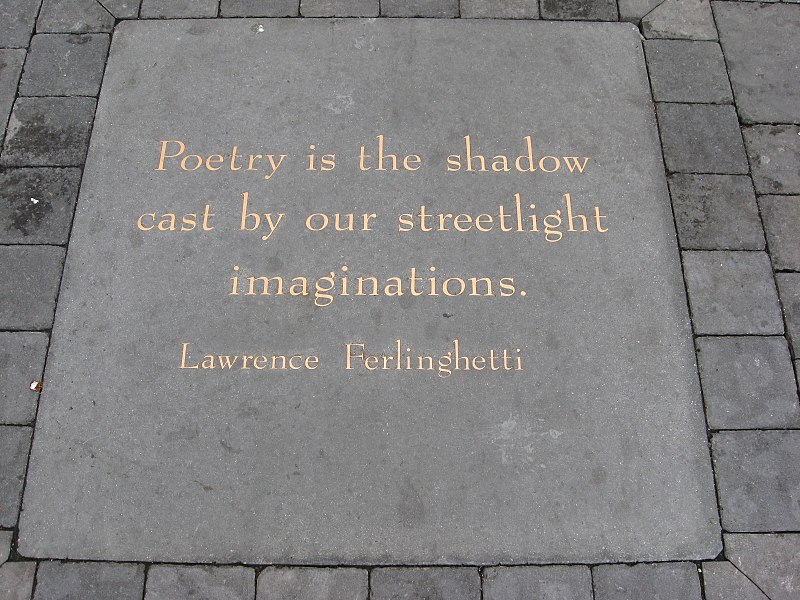
Engraved stone, Ferlinghetti poem

A Ferlinghetti poem plaque in San Francisco’s Jack Kerouac Alley