Framing Ellen Howard for “On the Threshold”

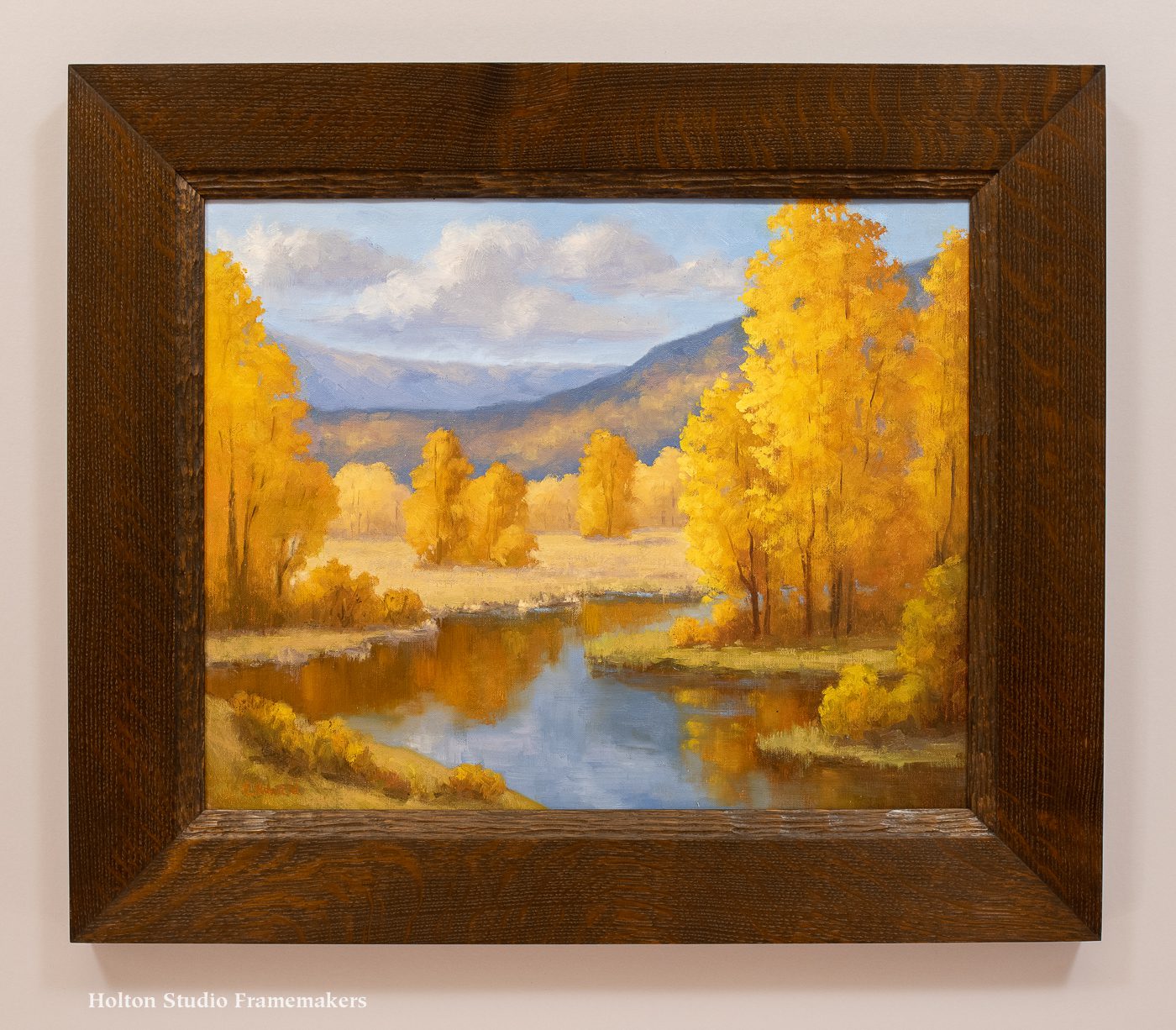
A week from Saturday is the opening of our new show, “On the Threshold: Ellen Howard, Tia Kratter, and Kim Lordier,” and we’re framing up a storm. This beautiful autumn scene is Ellen’s “Interconnected,” an oil on panel, 16″ x 20″, which we’ve set in a 3″ wide slope with a carved sight edge (No. 2.4 CV) in quartersawn white oak with Medieval Oak stain.

In this show featuring three women, three mediums, three views, each artist explores the threshold theme. For Ellen Howard, it’s about seasons:

The threshold of each new season is a space in time for us to look at what has been and what is to come. The paintings in this show represent my creative journey, from the quiet dormancy of winter to the exuberance of spring, vitality of summer and the warm comforts of fall. Painting through the seasons allows me to boldly embrace change and listen deeply with intention to my creative calling.

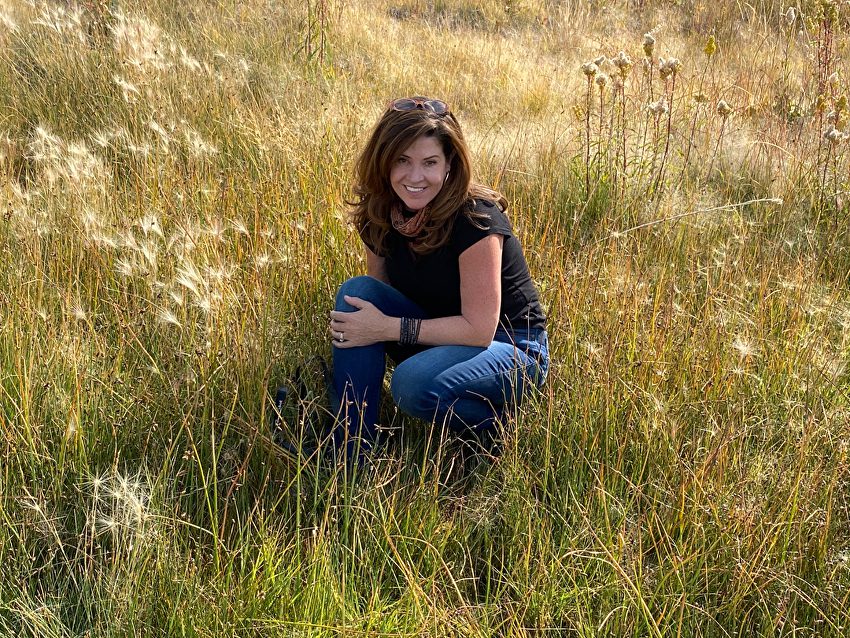
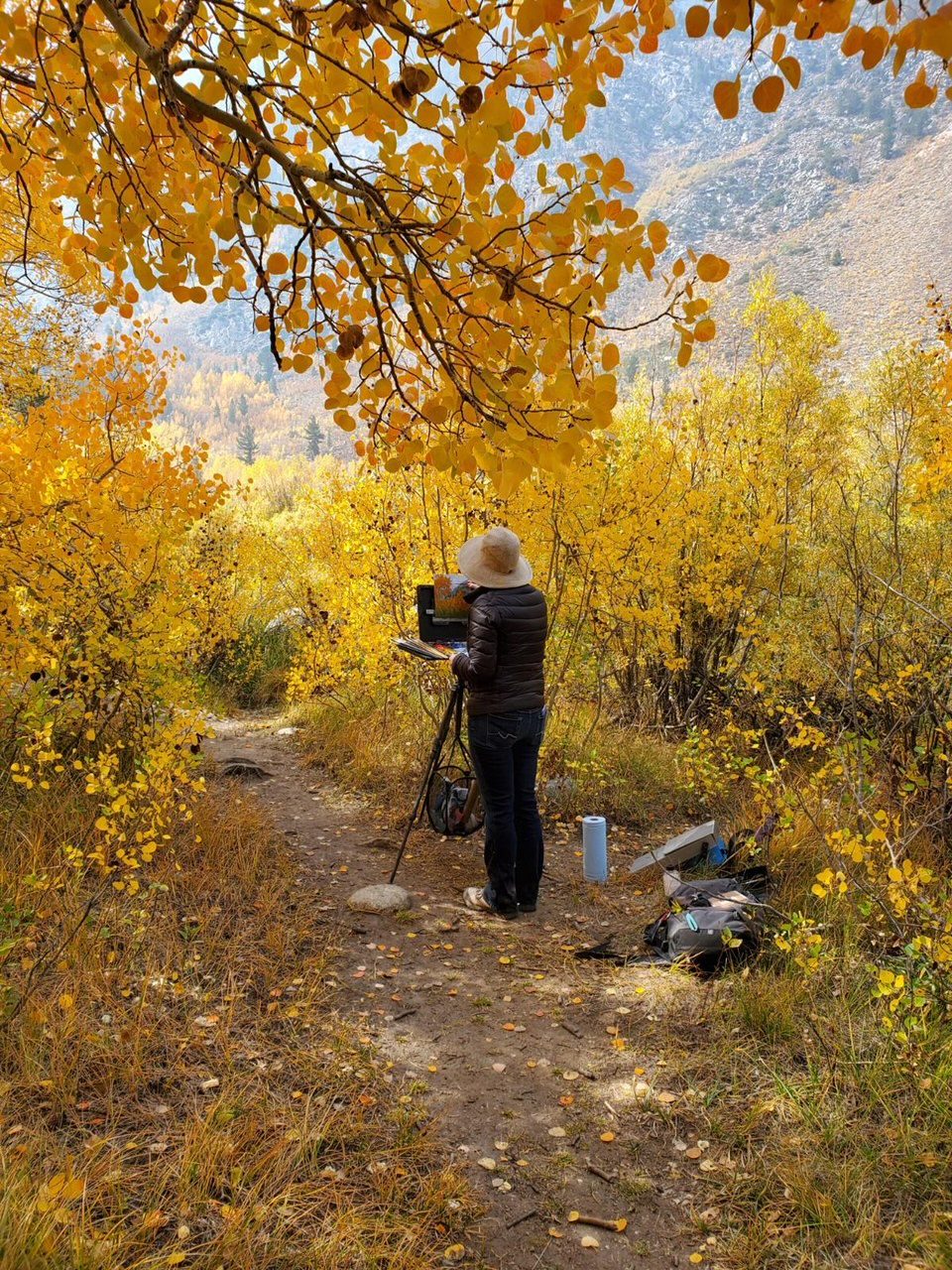
Ellen Howard painting in aspensEllen explains her attraction to aspens:

The aspens are considered a single organism connected through a shared root system. They are also important for biodiversity. They provide a habitat for a variety of animals, nesting sites, and food sources. These trees are considered sacred to indigenous communities too. Lastly, they are gorgeous trees—seeing the bright yellow-orange leaves makes people happy and I love seeing the leaves in the wind. The leaves twinkle like being in a fairyland.

These reflections Ellen expresses in “Interconnected”:

I wanted to portray the intricate web of relationships and interdependencies that define our existence through the beauty of the aspen trees. I enjoyed working with a higher-key palette and mixing the variety of vibrant yellows and oranges occurring in the vast aspen groves. This palette reminds me of the comforts of home and the subtle changes in our environment as we say goodbye to summer and welcome the slower pace of the fall season. My hope for this piece is that it serves as a reminder of the interconnectedness of humanity and our shared responsibility to protect and cherish our planet. It invites contemplation and reflection, prompting a deeper appreciation for the delicate balance and beauty that surrounds us.

Again, “On the Threshold” opens Saturday, July 22 with an opening reception from 2-4, and runs to August 26. The exhibit’s webpage, which will eventually show all the works, is here.

View Ellen’s page…

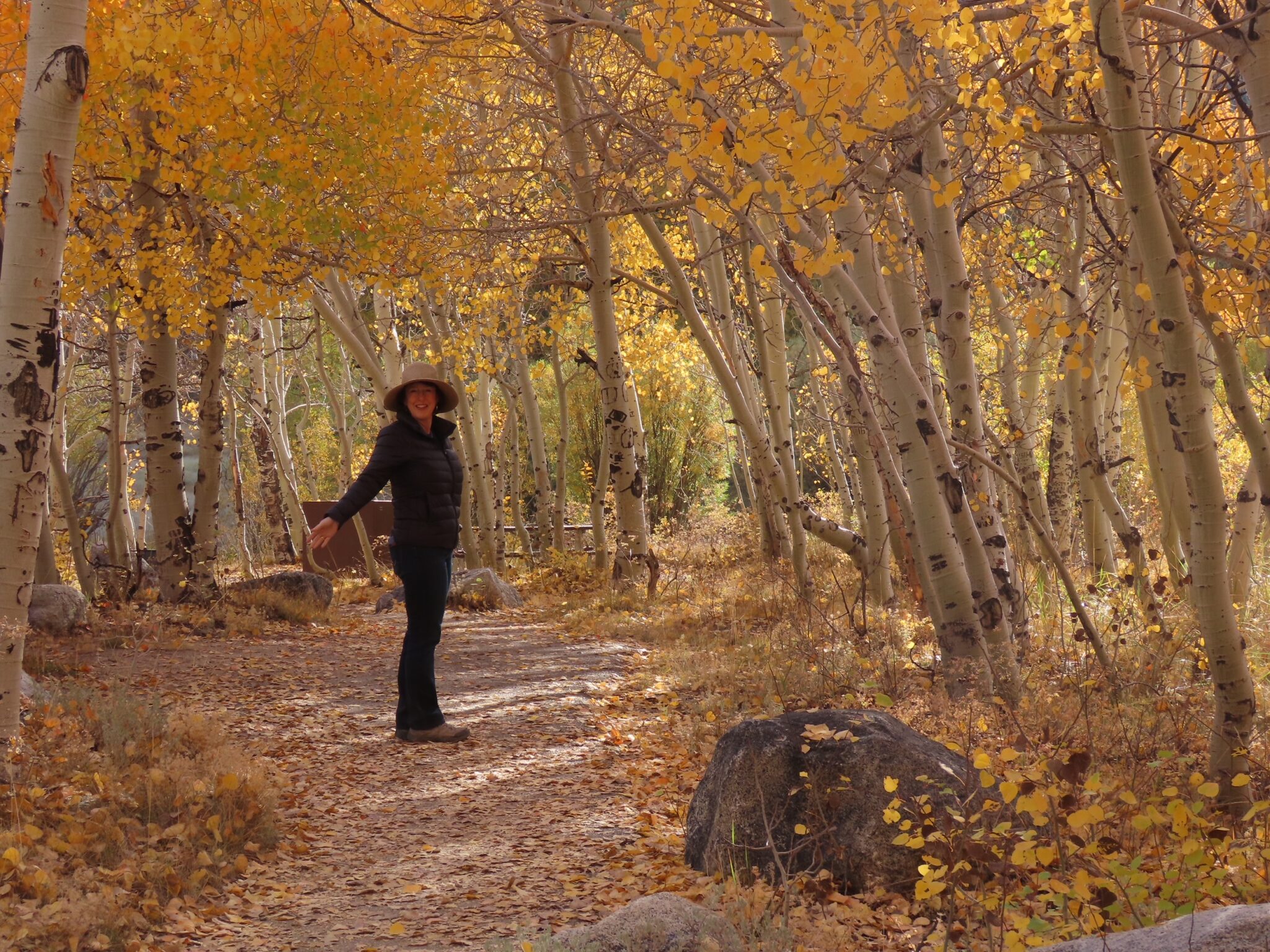
Ellen Howard in the aspens

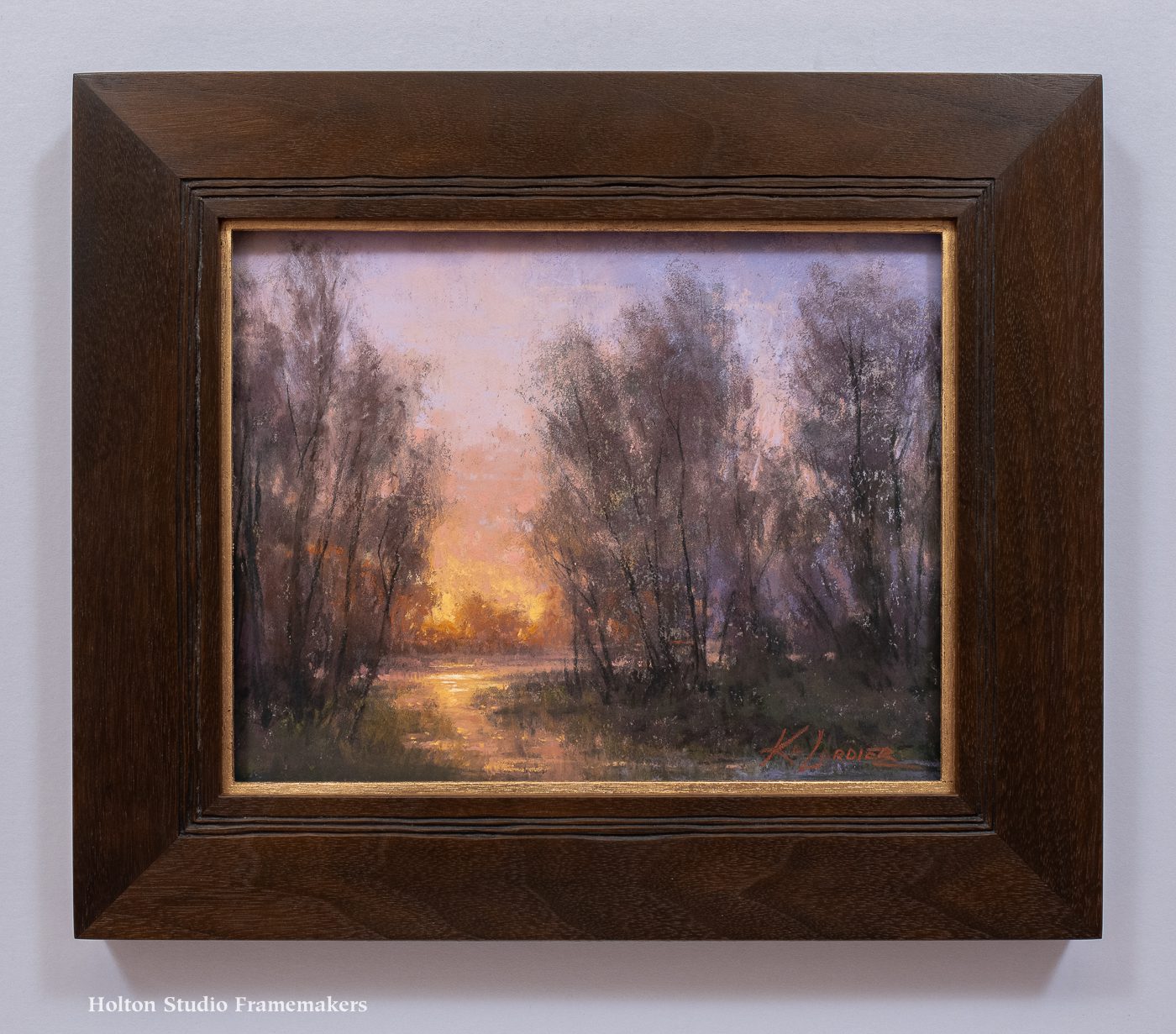
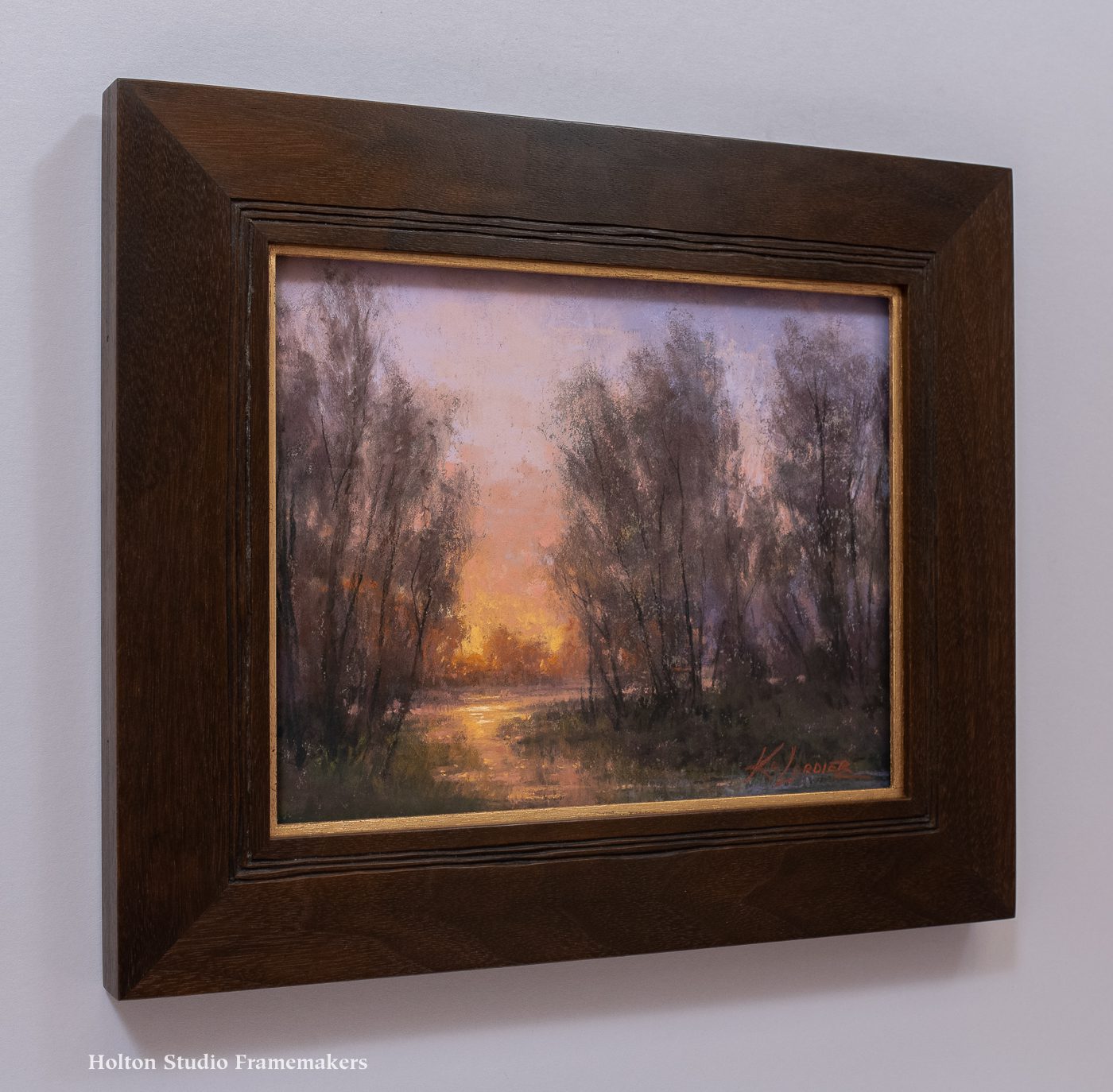
Ellen Howard frame by aspens, and photographed by her good friend Kim Lordier

Framing Hedwig Casprzig’s Big Cats

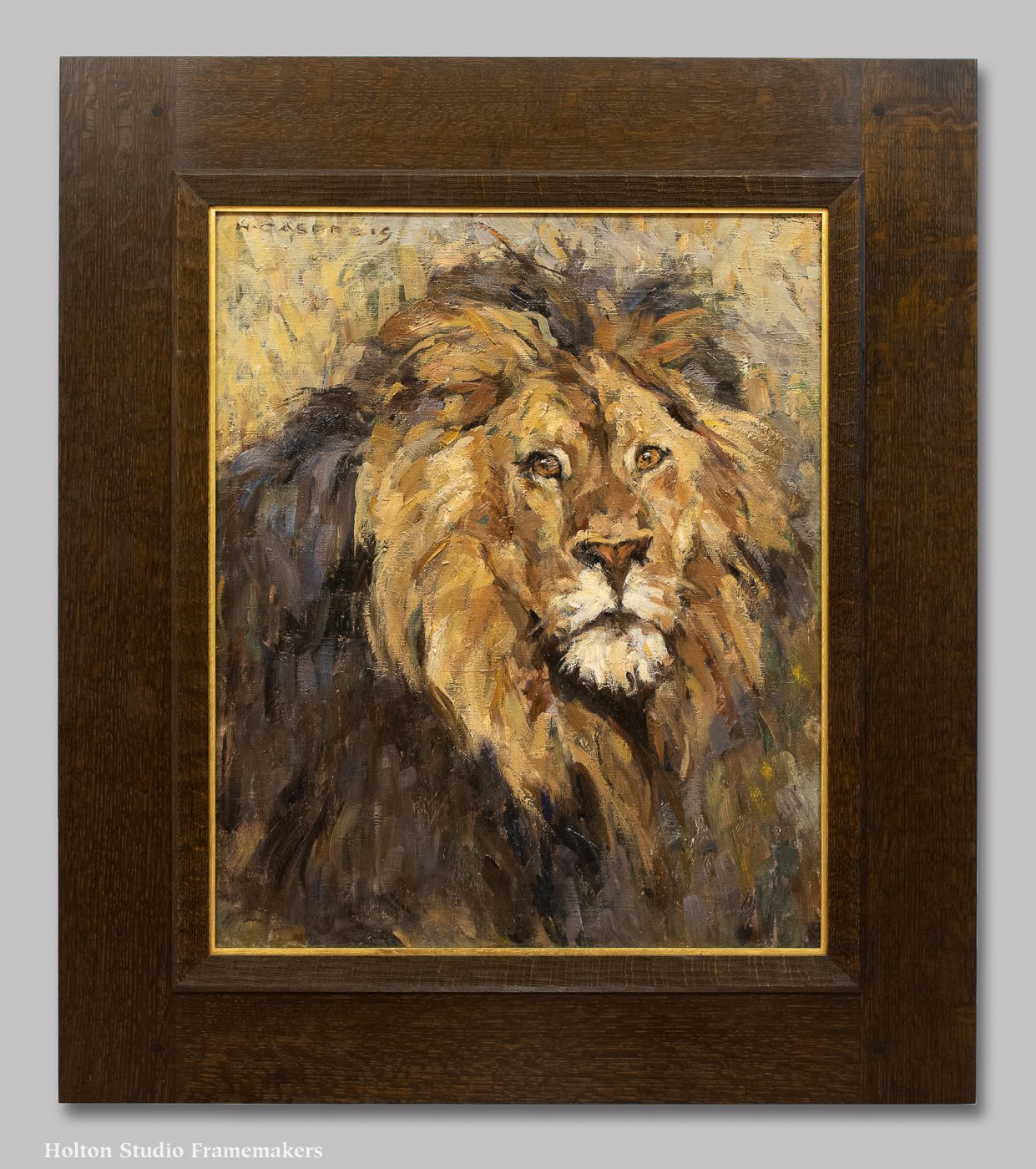
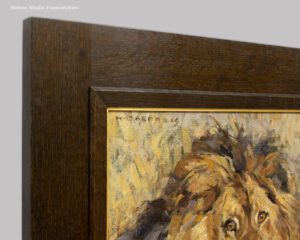
Hedwig Casprzig (1886 – 1958) was an outstanding German wildlife painter. We recently had the honor of framing two of the artist’s paintings of big cats. The first one here, a lion’s head Casprzig painted in oil on canvas, is 25-1/2″ x 21″. The 5″ wide frame is in quartersawn white oak with Medieval Oak stain. The compound Aurora frame combines a broad mortise and tenon flat with a 1-1/4″ wide carved beveled sight edge molding and a 3/16″ gilt slip. I like the way the picture frame repeats the how the mane of the male lion frames its face.Casprzig painting of lion head

This tiger head, a pastel on paper, is a bit smaller (about 13″ x 11″) but even more intense in expression. I chose a 3″ wide slope, No. 22.6 CV, to sustain the feeling of the cat coming at you.

Casprzig painting of tiger headH. Casprzig painting of tiger head

Debey Zito and Terry Schmitt

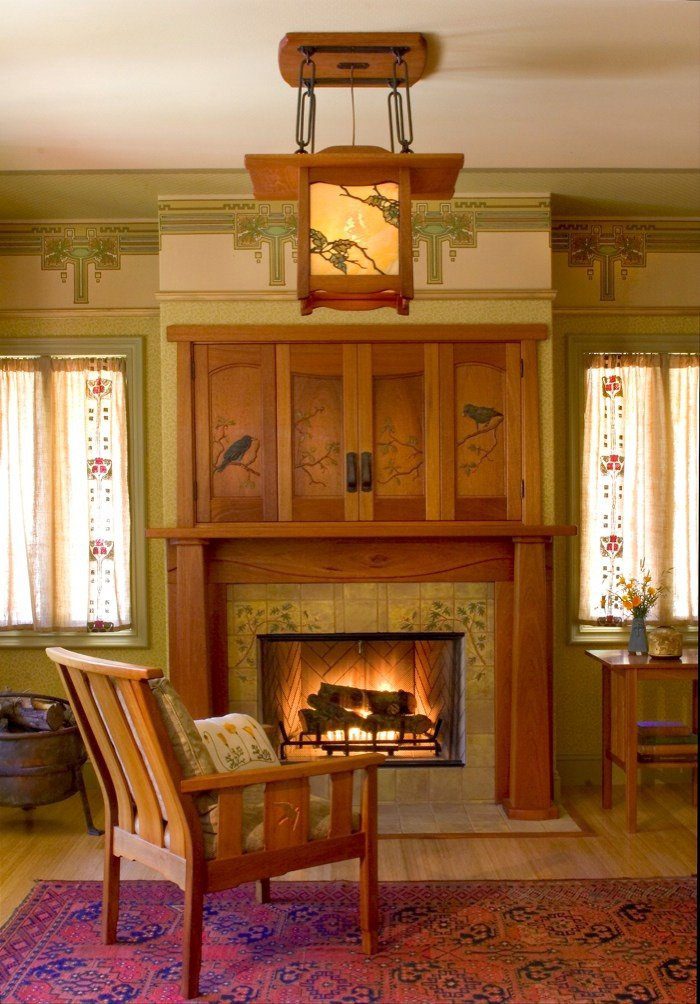
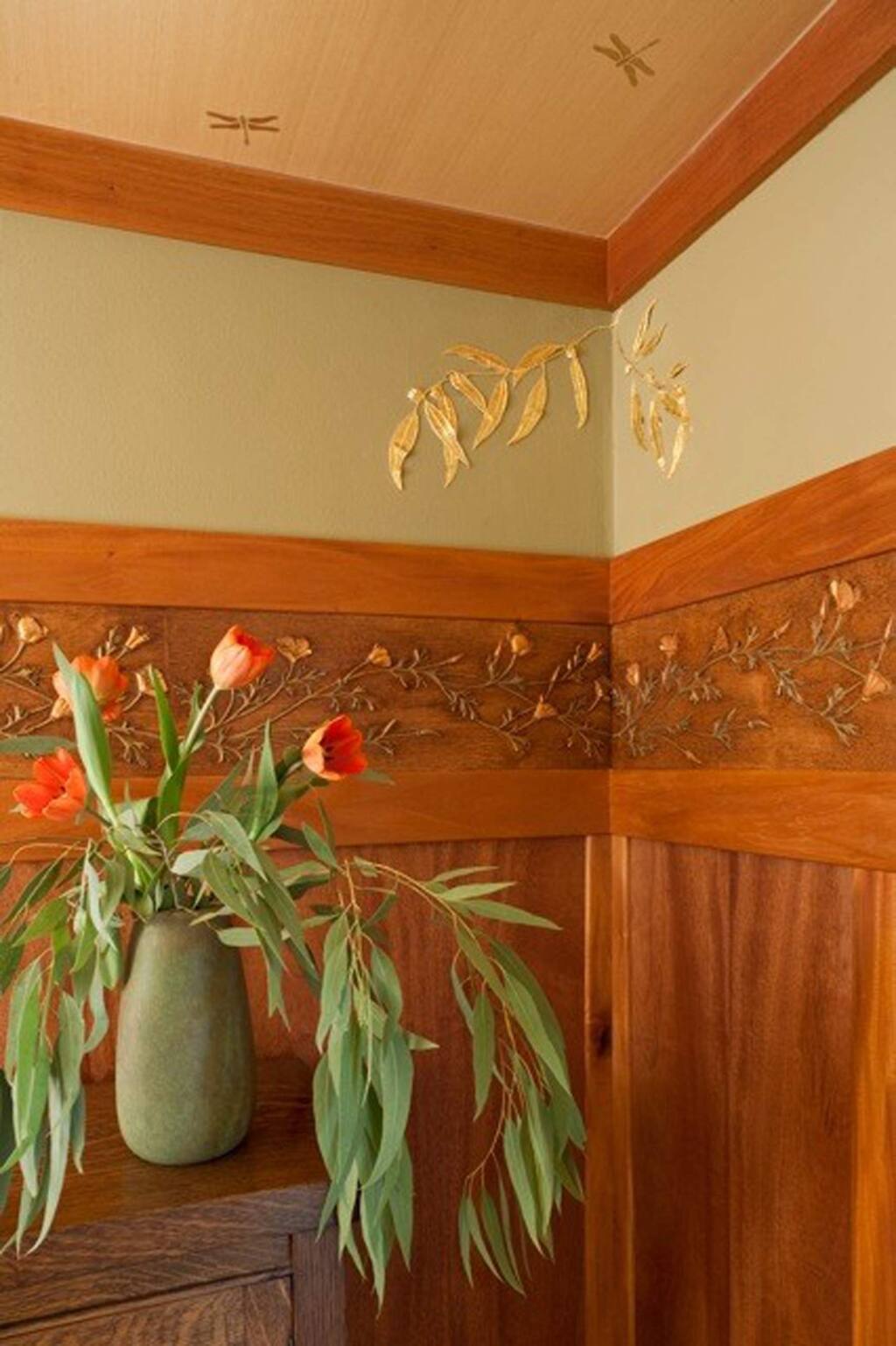
There’s a key principle of the Arts and Crafts Movement that few artisans fully grasp; and of those who have, even fewer have pursued and found the opportunities to apply their understanding. That principle is the unity of the arts, and it’s only at the architectural scale, in the collaboration of many trades, that one is able to fully express that ideal. But it requires more than design to accomplish. The interior designer or architect, at least in my experience, must also be an accomplished artisan. Because truly fulfilling the ideal of the unity of the arts requires both a comprehensive view of the project and a facility with detail—a facility at that particular level that only an artisan is truly engaged with.

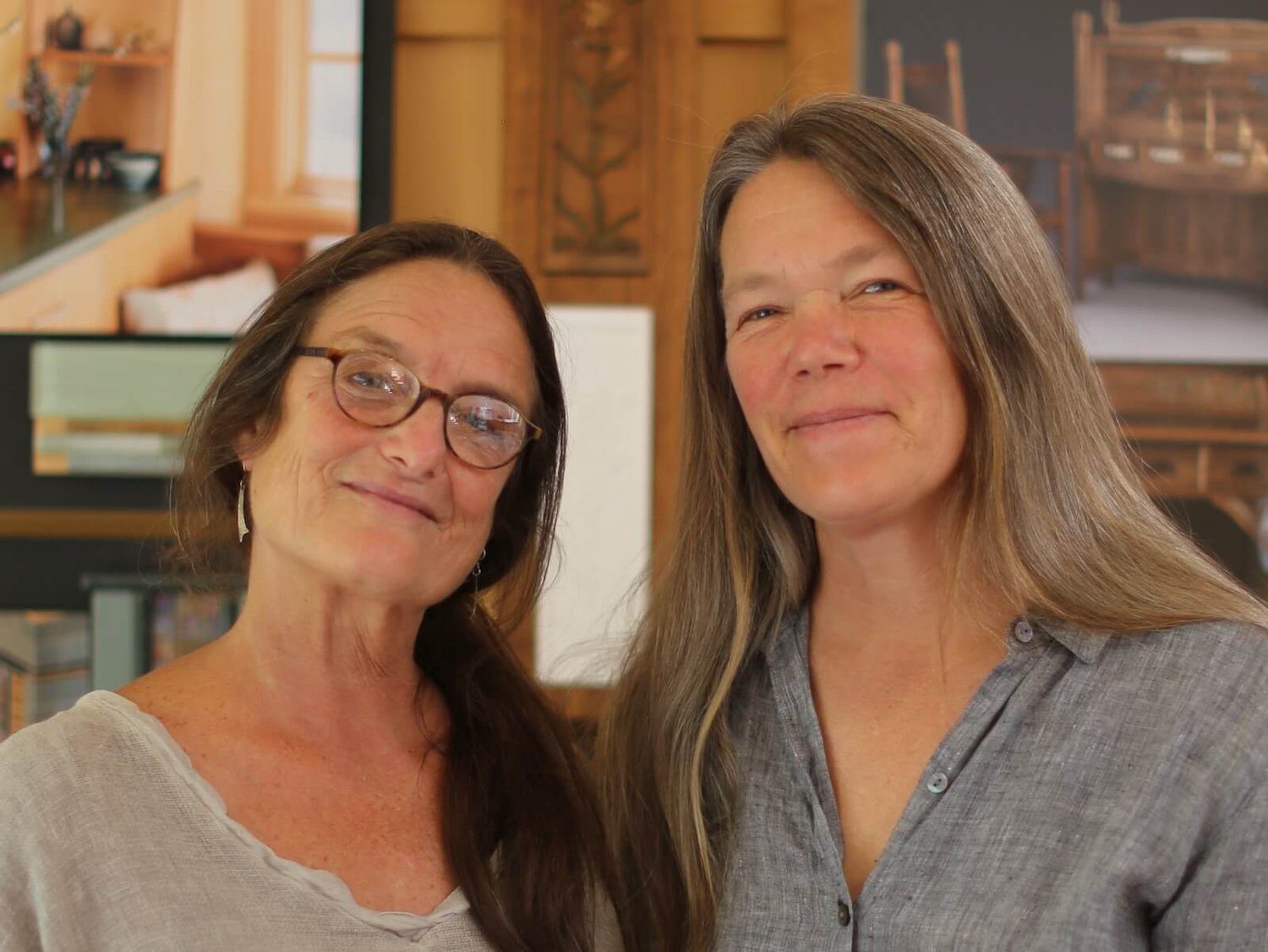
Zito Schmitt Design, the work of Debey Zito and Terry Schmitt, fits that bill. Debey started her studio in San Francisco in 1980 building furniture, but also immersing herself in architecture and interiors. Terry Schmitt came on as an apprentice, bringing carpentry skills and fine art training as a student at San Francisco State. Discovering carving tools at Debey’s studio, she now especially excels in woodcarving, which is often painted. With those indispensable backgrounds, the team now focuses on interior design, which, as they say on their website, “is a collaborative process, working closely with clients, builders, consultants, fabricators, and artists.”

If you’re considering building or remodeling and would like to have the project guided by the timeless spirit of the Arts and Crafts Movement—a collaborative, comprehensive design sensibility grounded in masterful handcraft—I whole-heartedly recommend Debey Zito and Terry Schmitt, and Zito Schmitt Design.

A sampling of interiors by Zito Schmitt Design—

Find more at ZitoSchmittDesign.com.

Zito Schmitt Voysey fireplaceZito Schmitt dining roomZito Schmitt dining room detail

More at ZitoSchmittDesign.com.

Selected Press:

The Press Democrat, “Sebastopol woman creates magic in wood” by Meg Mcconahey, January 9th, 2015

Curbed, “Nationally-renowned, intricate woodworking has roots in Bay Area” by Daphne White, December 27th, 2019

Sonoma West Marketplace, “West County woodworkers draw on nature for heritage works of art” by David Abbott, April 13th, 2016

Apple Sauce, Suitably Framed

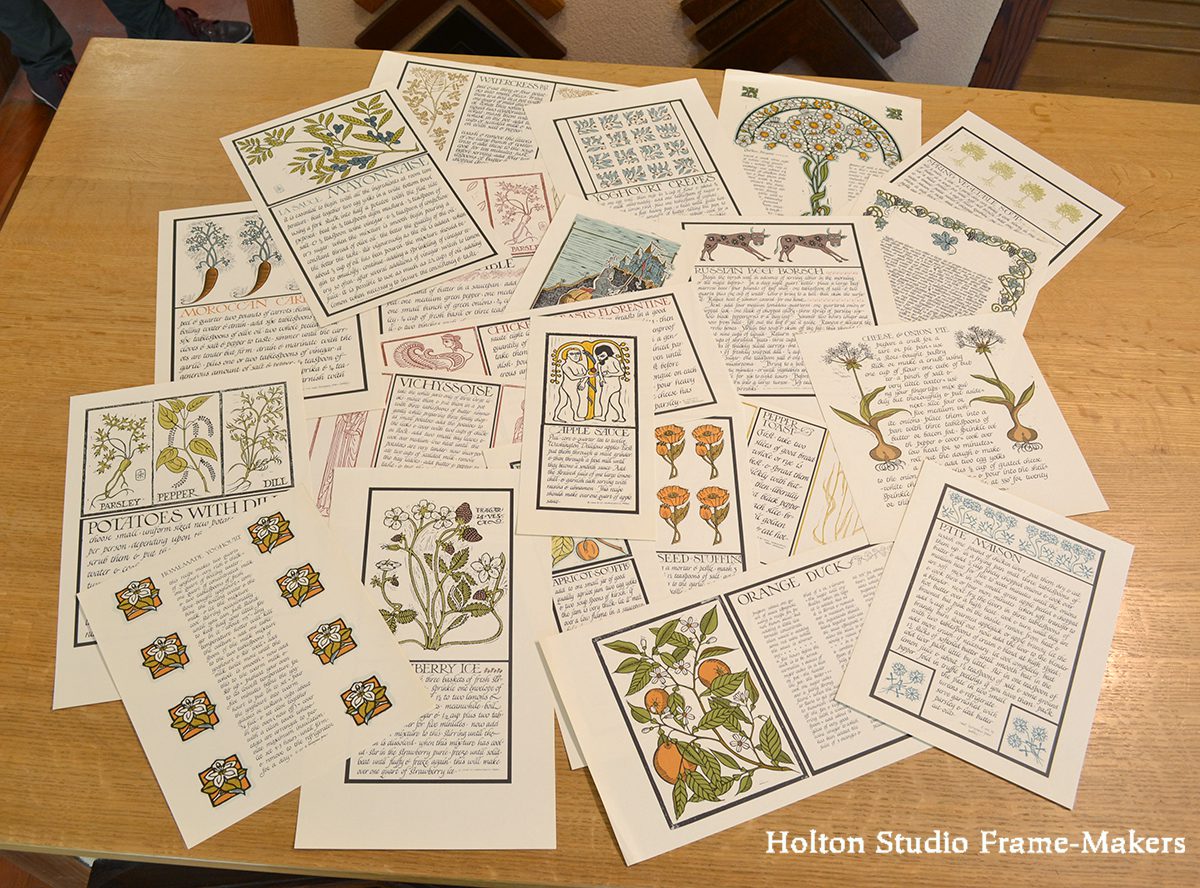
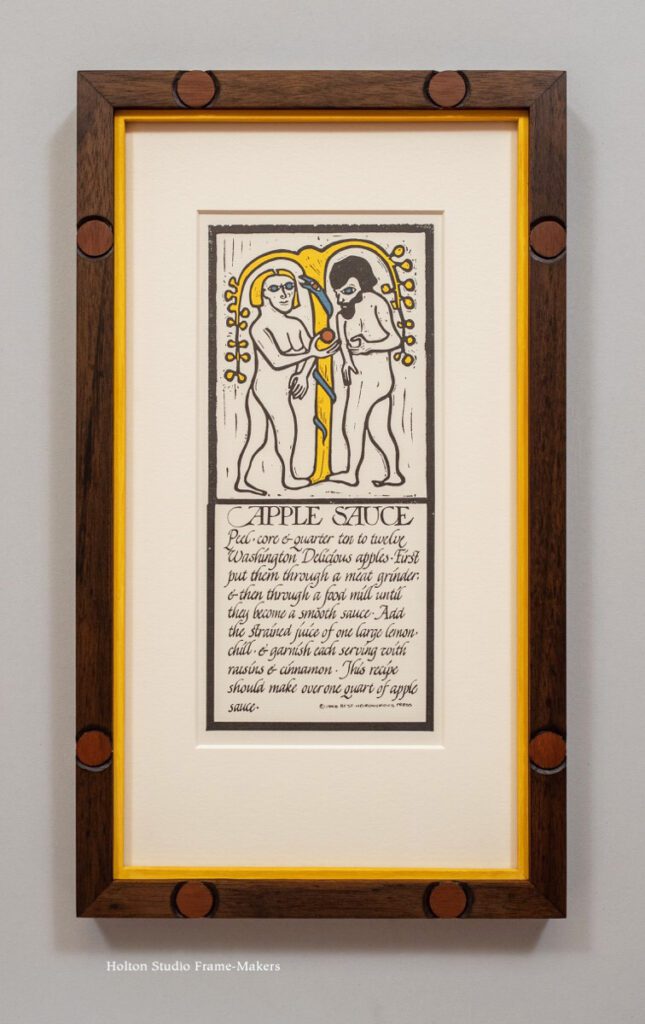
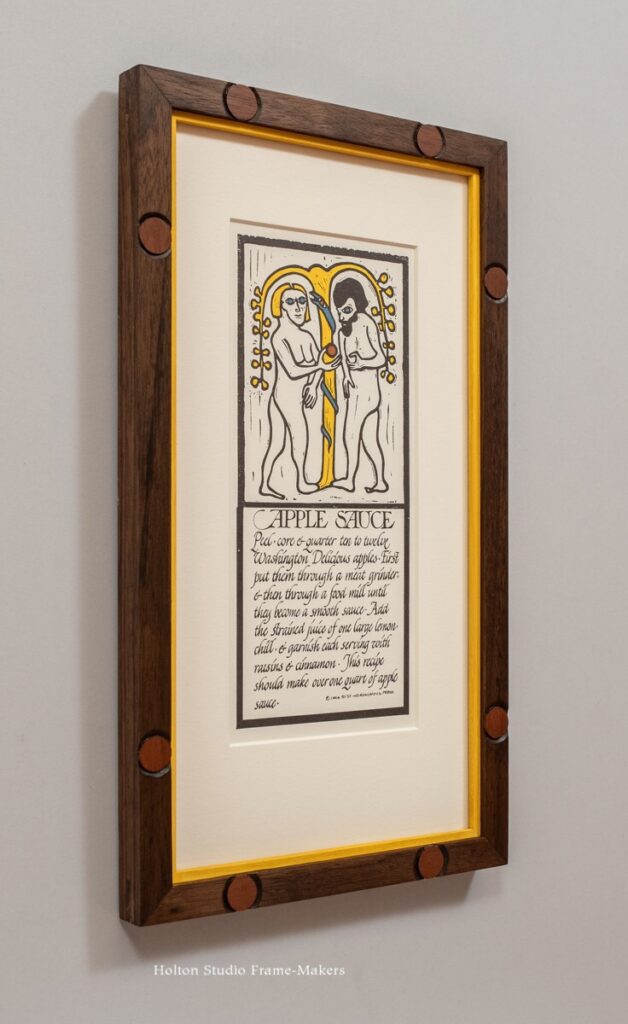
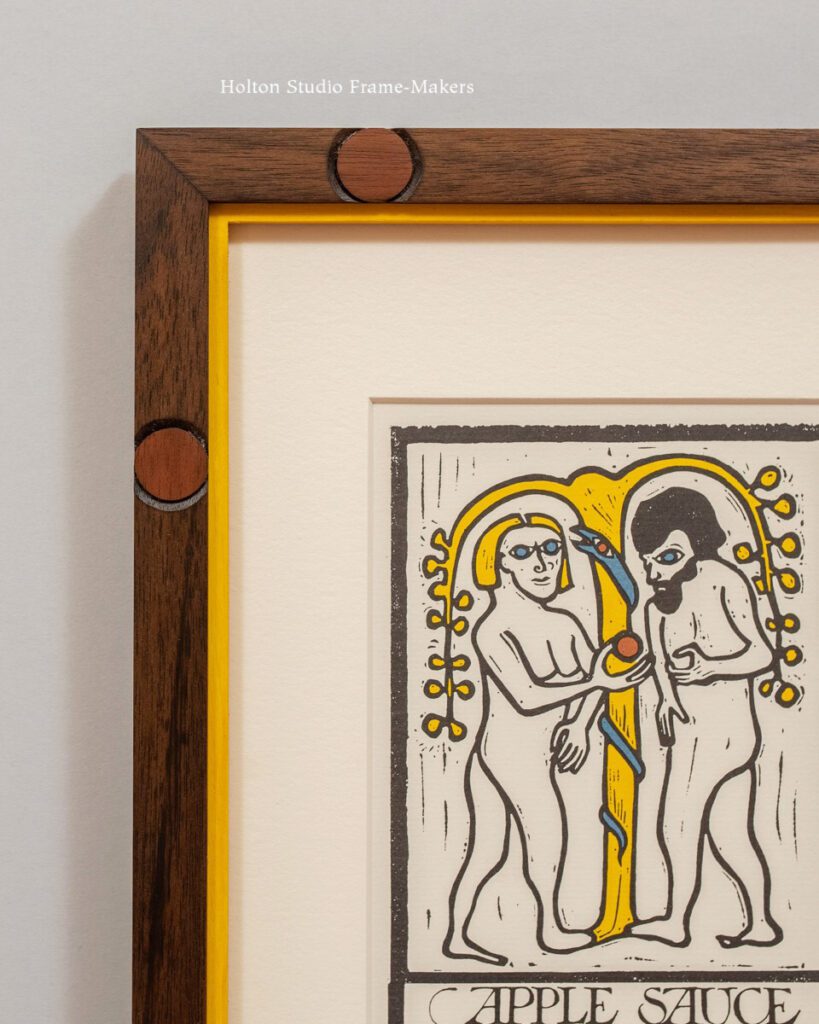
Yesterday I posted (here) about the David Lance Goines woodcut prints we’re offering, all from “Thirty Recipes Suitable for Framing,” which Goines did with his friend Alice Waters around 1970—Goines & Waters, array of 22 prints from "Thirty Recipes Suitable for Framing"just as she was about to open her now world-renowned restaurant, Chez Panisse. I can show you how one of those, “Apple Sauce,” (right in the center of the array posted yesterday and shown at right) may be framed because a customer brought us another impression of it last year. For him, we matted the 9″ x 4″ print and set it in a flat 5/8″ walnut frame with carved and painted circles repeating the central motif of the print. A cheerful (hey, at least we got apple sauce in the bargain) yellow slip matches the tree of knowledge and Eve’s hair.

After yesterday’s post, we sold a few, but still have “Apple Sauce” and 17 (at this writing) other prints from “Thirty Recipes Suitable for Framing,” available for $90 each.

More posts on the late David Lance Goines can be found here, here, and here. We also have two beautifully framed Goines posters here.

David Goines-Alice Waters Recipes Suitable for Framing

Several months ago we came into a set of the prints that the late graphic artist and printer David Lance Goines produced around 1970 illustrating recipes by his one-time girlfriend and famed chef Alice Waters of Chez Panisse. The complete folio is titled “Thirty Recipes Suitable for Framing,” and our set included all but one. (The missing one, sadly, was “Chocolate Mousse”!). We’ve sold several, but still have 22, offered for $90 each.

The set is significant in contemporary American culture—enough so that the National Museum of American History at the Smithsonian saw fit to add a set to its collection. You’ll find quite a nice explanatory essay on their website, here.

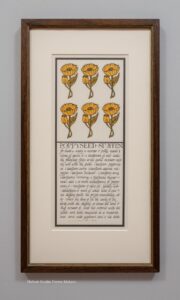
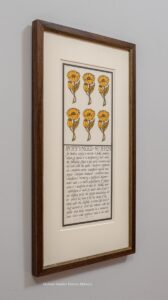
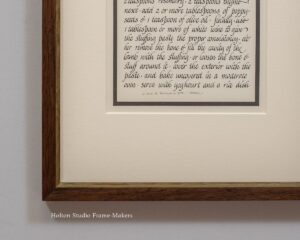
The recipes are not only suitable for framing but also, being smaller than 16″ x 20″, are suitable for Everyday Framing—our simple, discounted approach. Or do something more special, like we did with “Poppyseed Stuffing,” below, framed in a No. 16 CV in walnut with painted sight edge. (A customer brought us the one below a while back; we have another of these in our set.) Or pull out the stops completely as we did with “Cherries Jubilee.”

If you can’t swing by the shop to have a look, feel free to call or email us and we can send you a list of the prints, as well as images of them and framing suggestions.


Framing Eric Bowman

While it’s true that we work in what’s called the cabinetmaker’s frame tradition and regard ourselves as essentially furniture makers, or—the older description I prefer—joiners, who make picture frames, we almost never take on furniture projects. Picture framing keeps us plenty busy. But when Oregon painter Eric Bowman asked us to build a quartersawn white oak Craftsman style screen we agreed. After all, it was to have four of Eric’s beautiful paintings set in to it—figurative oil paintings of Indians which also illustrate the four seasons. So it was, in fact, a set of four mortise and tenon picture frames—not at all out of the ordinary for us. And very much in the spirit of the Arts and Crafts Movement that we and Eric both venerate.

"Four Seasons," screen with four paintings by Eric BowmanThe paintings, which are set off with 1/4″ gilt oak slips, are each 36″ x 20″. Each panel is 69″ high x 24″ wide, so the full dimensions of the screen are 69″ x 97″. Trevor Davis did a superb job building the screen.

Eric Bowman screenEric Bowman is a exceptional talent, as has been acknowledged with a great many awards and articles (like this 2018 profile in Southwest Art magazine). His hope was that “The Four Seasons” was to be a very special showpiece—literally—being entered in the annual Prix de West Invitational Art Exhibition and Sale at the National Cowboy and Western Heritage Museum in Oklahoma City, an enormous exhibit, including 88 artists, each showing multiple works. The show took place earlier this month, and all went beautifully. (The picture at right shows it on display.) As Eric’s video below mentions, the screen was a crowd pleaser. And it sold! The second video is an interview with the artist at the show.


Watch Eric Bowman’s interview with Medicine Man Gallery’s Mark Sublette at the Prix de West Exhibition.

Visit Eric Bowman’s website…

See details of the four paintings in Eric’s blog post…

Visit the Prix de West Exhibition’s site, which includes a virtual tour…

Paul Kratter Demo This Saturday

As part of our one man show, Paul Kratter: View Through the Trees, the artist will do a painting demonstration here in the Gallery this Saturday, June 3 from 10 to 12. It’s free and open to all, but seating will be limited. One of the stars of California’s thriving landscape painting world, Paul recently won best of show at the Carmel Art Festival.

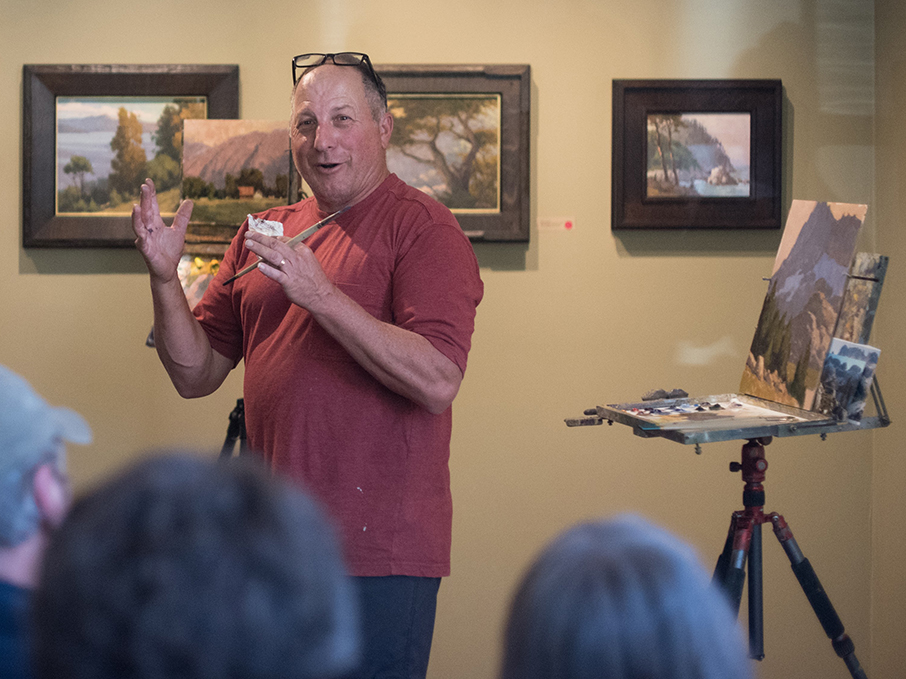
Below is a photo of Paul during a demo he did here in 2017. Paul is a very popular teacher, and his demos are invariably engaging and illuminating. Hope you can come!

And don’t miss Paul’s show, View Through the Trees, which closes June 10—in just over a week! View it online here. Or come in to see it if you can!Paul Kratter painting demo

Framing a William Seltzer Rice Nautical Print

Over the years, we’ve framed quite a few works by William Seltzer Rice, and just recently had a few more come in. I especially love Rice’s nautical prints—like this one, “Ships of Yesterday” (ca. 1926), which we just framed for Gus Bostrom of California Historical Design. (It’s available here.) Rice carved parallel fine lines in the woodblock for shading. So to create a harmonious setting, we used that same technique in a simple flat frame in walnut stained black, with fine flutes carved into the face. For color harmony, a green painted slip answers the bit we see of the ship’s great setting—the mighty green ocean. Trevor made the frame.

WS Rice block printFramed WS Rice print